How Crawler Crane Counterweight Systems Have Evolved
Counterweights are the unsung heroes of crawler crane operation. They provide the critical balance needed to safely lift massive loads with long lattice booms. Over the decades, counterweight systems have evolved dramatically — from simple fixed blocks to sophisticated modular and super-lift designs. This evolution has dramatically improved safety, lifting capacity, transportability, and on-site efficiency.
Understanding how crawler crane counterweight systems have developed helps operators, contractors, and project managers appreciate modern machines and make better equipment decisions.
Early Counterweight Systems (1950s–1970s)
In the early days of lattice boom crawler cranes, counterweights were basic:
- Fixed Concrete or Steel Blocks: Heavy, non-adjustable slabs placed directly on the rear of the machine.
- Limited Adjustability: Capacity was restricted by what could physically fit on the crane.
- Labor-Intensive: Adding or removing weight required significant manpower and time.
- High Transport Costs: Large, heavy counterweights were difficult and expensive to move between job sites.
These rudimentary systems worked for smaller cranes but became major limitations as lifting capacities increased and projects grew more complex.
The Modular Revolution (1980s–2000s)
The introduction of modular counterweight systems marked a major breakthrough:
- Stackable Counterweight Trays: Manufacturers like Manitowoc, Liebherr, and Link-Belt developed systems where smaller weight slabs could be stacked and configured as needed.
- Hydraulic Removal Systems: Some models allowed counterweights to be self-assembled or removed using the crane’s own hydraulics.
- Improved Transportability: Modular designs could be broken down into legal highway loads, significantly reducing mobilization costs.
This era also saw the emergence of central ballast and rear-mounted counterweight trays, giving engineers more flexibility in balancing the crane for different boom lengths and load radii.
Super-Lift and Advanced Counterweight Systems (2010s–Present)
Modern crawler cranes feature the most sophisticated counterweight technology ever seen:
1. Super-Lift Systems
Liebherr’s innovative super-lift tray (and similar systems from other manufacturers) dramatically increases capacity by placing additional counterweight farther behind the crane. This creates a much larger tipping moment, allowing safe lifts at greater radii.
2. Variable Counterweight Systems
Many new models allow operators to adjust counterweight amounts and positions based on real-time lift requirements. Some systems can even add or remove counterweight during a lift cycle.
3. Integrated Counterweight Monitoring
Advanced sensors and load moment indicators now continuously monitor counterweight configuration, automatically adjusting load charts and providing alerts if setup is incorrect.
4. Lightweight High-Strength Materials
Newer counterweights use high-density materials that deliver more weight in smaller packages, improving transport efficiency without sacrificing performance.
5. Remote and Automated Counterweight Handling
Some of the largest cranes (including XCMG and Liebherr ultra-heavy models) feature powered counterweight wagons or self-erecting systems that reduce the need for assist cranes during assembly.
Key Benefits of Modern Counterweight Evolution
- Higher Lifting Capacities: Modern systems allow significantly more load at greater radii.
- Improved Safety: Automated monitoring and interlocks reduce human error.
- Better Job Site Efficiency: Faster assembly/disassembly and less need for multiple cranes.
- Lower Transportation Costs: Modular designs fit more easily on standard trailers.
- Greater Versatility: One crane can be optimized for many different lift scenarios on the same project.
Impact on Real-World Projects
- Wind Energy: Longer booms and advanced counterweight systems allow safe lifting of larger nacelles at impressive heights.
- Bridge Construction: Better stability enables precise placement of heavy girders over live traffic.
- Industrial Turnarounds: Modular systems allow quick reconfiguration during tight shutdown windows.
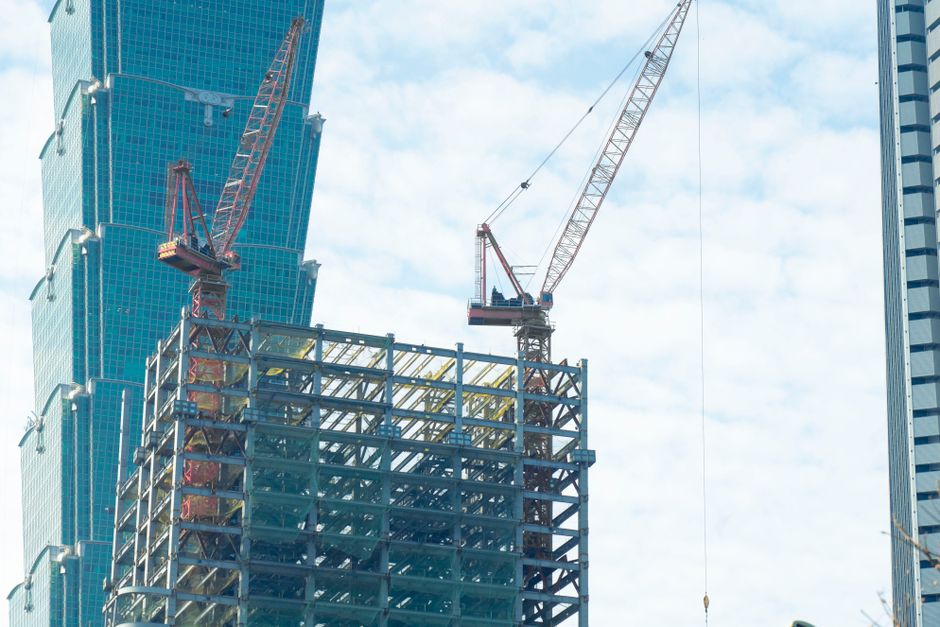
- Urban High-Rise: Compact yet powerful counterweight designs work within tight city footprints.
Challenges That Remain
Despite major advances, modern systems still require:
- Thorough planning and correct configuration
- Proper ground preparation and matting
- Well-trained operators and lift directors
- Regular inspection and maintenance of counterweight attachment points
Future Trends in Counterweight Technology
- Active Counterweight Systems: Computer-controlled weights that automatically shift position during lifts.
- Hybrid and Electric Integration: Counterweight designs optimized for alternative power sources.
- Digital Twin Integration: Virtual modeling of counterweight setups before physical assembly.
- Further Weight Reduction: New materials that maintain mass while reducing volume.
Conclusion
The evolution of crawler crane counterweight systems reflects the broader progress of the heavy lifting industry — moving from brute strength toward smart, efficient, and safer engineering. What began as simple fixed blocks has become a sophisticated, adaptable system that dramatically expands what modern lattice boom crawler cranes can achieve.
For operators, understanding counterweight principles and configurations remains one of the most important aspects of safe, professional crane operation. For contractors, choosing machines with advanced counterweight technology often translates directly into better project outcomes, lower costs, and improved safety records.
As projects continue to demand greater heights, heavier loads, and tighter schedules, the ongoing development of counterweight systems will remain central to the future of crawler crane performance. The machines that lift the world’s biggest components today do so thanks to decades of innovation in this critical area.
Whether you operate, rent, or manage crawler cranes, staying informed about counterweight technology evolution helps ensure you’re using the safest and most efficient equipment available for every high-stakes lift.
*Word count: 1,139*
Keywords/Tags: Markdown 複製 crawler crane counterweight systems, lattice boom counterweight evolution, super-lift counterweight, modern crawler crane counterweights, Liebherr super-lift, Manitowoc counterweight system, crawler crane stability, heavy lift counterweight technology, crawler crane counterweight history, advanced counterweight systems