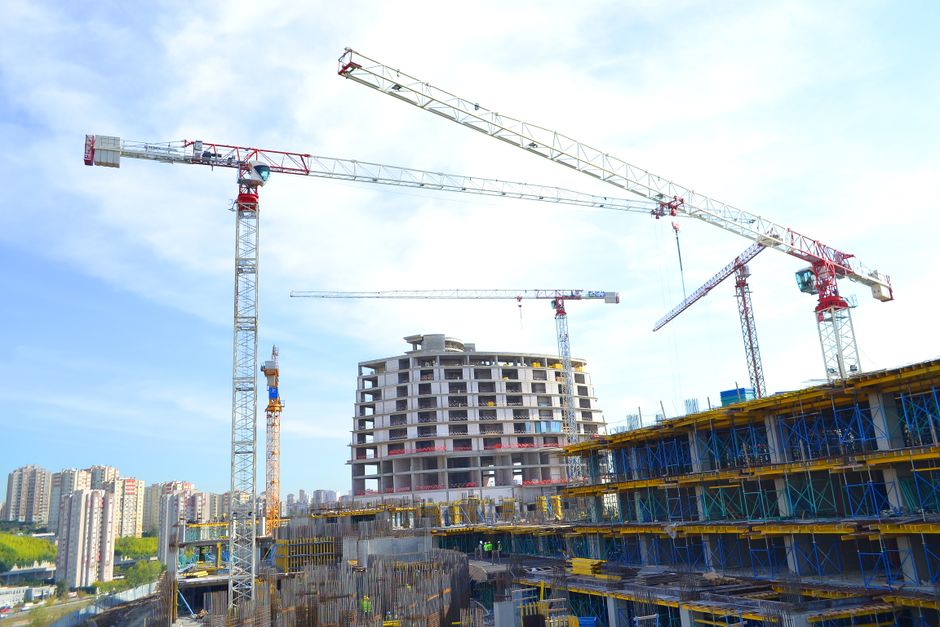
Tag: Mobile crane

  • Understanding Mobile Crane Hand Signals (with Charts)

    Clear communication is one of the most critical elements of safe mobile crane operations. Because the operator often has limited visibility and works at a distance from the load, standardized hand signals serve as the universal language between the crane operator, riggers, and signal persons. Misunderstood signals can lead to accidents, dropped loads, or injuries.

    This comprehensive guide explains the most important mobile crane hand signals, based on widely accepted standards like OSHA 1926.1419 and ASME B30.5, with visual charts for easy reference.

    Why Hand Signals Are Still Essential

    Even with modern radio systems, hand signals remain a required backup and are often the primary method on many job sites. They are:

    Reliable when radios fail or in high-noise environments

    Required by law for many lifting operations

    Fast and effective for precise instructions

    A critical part of NCCCO and other certification exams

    Every qualified signal person and crane operator must know and use these standardized signals consistently.

    Basic Mobile Crane Hand Signals Chart

    Here are the most commonly used signals:

    Stop and Emergency Signals

    Stop — Extend one arm horizontally with palm facing down, then move the hand back and forth.

    Emergency Stop — Both arms extended horizontally with palms facing down, waving rapidly up and down.

    Dog Everything — Clasp hands together in front of the body (means hold all movement).

    Boom and Load Movement Signals

    Raise Boom — Extend one arm horizontally and point thumb upward.

    Lower Boom — Extend one arm horizontally and point thumb downward.

    Hoist (Raise Load) — Extend one arm vertically with forefinger pointing up, then move hand in small circles.

    Lower Load — Extend one arm vertically with forefinger pointing down, then move hand in small circles.

    Swing Boom — Extend one arm horizontally and point in the direction the boom should swing.

    Move Slowly — Extend one hand with palm down and move slowly up and down.

    Advanced / Specialized Signals

    Raise Boom & Lower Load — Thumb up while making a fist with the other hand pointing down.

    Lower Boom & Raise Load — Thumb down while making a fist with the other hand pointing up.

    Retract Boom — Both hands clasped together with thumbs pointing inward (or one hand for telescopic booms).

    Extend Boom — Both hands clasped with thumbs pointing outward.

    Travel — Point in the direction of travel with both hands (or one for mobile cranes).

    Use Main Hoist — Tap the top of the head with one hand.

    Use Whip Line / Auxiliary Hoist — Circle one hand above the head.

    Best Practices for Using Hand Signals

    Ensure Clear Line of Sight — The signal person must stay visible to the operator at all times.

    Confirm Understanding — The operator should repeat or acknowledge signals before acting.

    Use One Signal Person — Only one designated person should give signals unless using the “stop” signal.

    Combine with Radio — Use hand signals as backup and for precision during critical lifts.

    Practice Regularly — Crews should conduct regular hand signal drills.

    Post Charts on Site — Display large hand signal posters visibly for reference.

    Common Mistakes to Avoid

    Using non-standard or unclear signals

    Giving signals while not in full view of the operator

    Multiple people signaling at once

    Poor lighting or visibility conditions without adjustments

    Assuming the operator “knows what you mean”

    Training and Certification Requirements

    Most certification programs (NCCCO, CPCS, etc.) require both operators and signal persons to demonstrate proficiency in standard hand signals. Refresher training is recommended annually or whenever a new crew forms.

    Modern Alternatives and Supplements

    While hand signals remain vital, many sites now combine them with:

    Two-way radios with headsets

    Boom-mounted cameras

    Wireless load monitoring systems

    However, operators and riggers must still master hand signals as the reliable fallback.

    Conclusion: Master the Language of Safe Lifting

    Understanding and consistently using standard mobile crane hand signals is a non-negotiable skill for every professional operator and rigger. These simple gestures form the backbone of safe communication on every job site, from small construction projects to massive infrastructure developments.

    Print out the charts in this guide, keep a pocket reference card with you, and practice regularly with your crew. Clear, standardized hand signals save time, prevent accidents, and demonstrate the professionalism that defines excellent crane teams.

    Master these signals, and you’ll become a more confident, safer, and more valuable member of any lifting crew.

  • Buying Mobile Crane Accessories: Hooks, Chains, and Slings

    A mobile crane is only as effective — and only as safe — as the lifting accessories used with it. The crane itself may be perfectly maintained, rigged by a competent operator, and working within its rated capacity — but if the hook, chain, or sling connecting the load to the crane is incorrectly selected, inadequately rated, or insufficiently maintained, the lifting operation is compromised at its most critical interface: the connection between the machine and the load.

    For crane operators, fleet owners, rigging teams, and the lifting managers responsible for their equipment, buying the right accessories is not merely a procurement exercise. It is a safety-critical decision that demands technical knowledge, regulatory awareness, and a disciplined approach to both selection and ongoing inspection. Getting it right protects your team, your loads, your clients, and your business. Getting it wrong — even once — can have irreversible consequences.

    This guide provides a comprehensive overview of the main types of crane lifting accessories — hooks, chains, and slings — covering what each type is, how to select correctly, what the regulatory requirements are, and how to evaluate suppliers and manage accessories throughout their operational life.

    Understanding the Regulatory Framework

    Before exploring the individual accessory types, it is important to establish the regulatory context within which crane lifting accessories must be selected, used, and maintained in the UK.

    LOLER — Lifting Operations and Lifting Equipment Regulations 1998

    LOLER applies not just to the crane itself but to all lifting accessories used with it. Under LOLER, lifting accessories — defined to include hooks, chains, slings, shackles, eyebolts, and all other devices used to attach loads to lifting equipment — must be:

    • Of adequate strength and stability for the purpose for which they are used
    • Clearly marked with their safe working load (SWL)
    • Subject to thorough examination before first use, after any exceptional circumstances, and at least every six months during normal use — or more frequently where risk assessment indicates

    The records of thorough examination for lifting accessories must be maintained in the same way as those for the crane itself, and defective accessories must be withdrawn from service immediately.

    PUWER — Provision and Use of Work Equipment Regulations 1998

    PUWER complements LOLER by requiring that all work equipment — including lifting accessories — is suitable for the purpose for which it is used, maintained in a safe condition, and inspected at appropriate intervals by competent persons.

    Supply of Machinery Safety Regulations and CE/UKCA Marking

    Lifting accessories placed on the UK market must comply with the Supply of Machinery (Safety) Regulations and carry the appropriate conformity marking — currently the UKCA mark for products placed on the Great Britain market, or CE marking under the transitional arrangements still applicable. These marks confirm that the accessory meets the essential health and safety requirements of the applicable directives and standards.

    When purchasing lifting accessories — whether from a UK supplier or internationally — verifying the presence and validity of the appropriate conformity marking is an essential first step. Accessories without valid conformity marking should not be purchased or used.

    Crane Hooks: Selection, Grading, and Safety

    The hook is the primary connection point between the crane’s lifting medium and the load or rigging assembly. Its correct selection and maintenance are fundamental to safe lifting.

    Types of Crane Hook

    Swivel hooks allow the load to rotate freely relative to the crane line — useful where loads may need to be rotated during the lift or where residual rotation in the wire rope could otherwise cause uncontrolled load movement. They incorporate a swivel bearing between the hook body and the attachment point.

    Shank hooks are rigidly attached by a threaded shank to the crane’s hook block or bottom block assembly. They are the most common hook type on mobile cranes and provide a direct, fixed connection without rotational movement.

    Clevis hooks attach via a pin and clevis arrangement rather than a shank, making them easier to replace and allowing for different attachment orientations. They are common in rigging applications and as lifting accessories independent of the crane’s integral hook arrangement.

    Safety hooks — sometimes called snap hooks — incorporate a spring-loaded safety latch that prevents accidental disengagement of the load or rigging from the hook. All hooks used in lifting applications should incorporate a safety latch; hooks without functional safety latches must be withdrawn from service.

    Hook Grades and Material Standards

    Crane hooks are manufactured from alloy steel to specific grades and standards that define their mechanical properties — yield strength, tensile strength, and impact resistance. The relevant standards for crane hooks in the UK and Europe include EN 1677 (components for slings) and specific manufacturer standards for hooks integral to crane equipment.

    When purchasing replacement hooks or hooks as standalone accessories, verify that they are manufactured to the appropriate standard for the application and rated for the specific safe working load required.

    Safe Working Load and De-rating

    Every hook must be clearly marked with its safe working load in a manner that remains legible throughout its service life. The SWL marked on the hook reflects its capacity under the assumed load conditions — typically a directly downward pull — and may be de-rated for certain applications, such as off-centre loading or use in multi-leg configurations.

    Never exceed the marked SWL on any hook, and never attempt to use a hook whose SWL marking has become illegible — such hooks must be withdrawn from service and either re-marked by a competent person or replaced.

    Hook Inspection Criteria

    Under LOLER, hooks must be subject to regular thorough examination by a competent person. Key inspection criteria include:

    • Cracks — particularly in the throat, saddle, and shank areas of the hook, which are subject to the highest stress concentrations. Any crack is an immediate disqualifying defect.
    • Deformation — hooks must be retired if the hook opening has increased by more than 10 percent from its original dimension, indicating permanent plastic deformation that compromises the hook’s structural integrity
    • Twist — any visible twist in the hook body indicates overloading and requires immediate withdrawal from service
    • Wear — excessive wear in the saddle or at the hook tip from repeated rigging contact reduces the effective cross-section and load-bearing capacity
    • Safety latch function — the latch must close fully and spring back securely; a latch that does not function correctly renders the hook unsafe for use

    Lifting Chains: Grade Selection, Capacity, and Care

    Lifting chains are among the most versatile lifting accessories available — robust, abrasion-resistant, and suited to a wide range of temperature extremes and hostile environments that would rapidly degrade fibre slings. Their correct selection, however, depends on understanding the grading system and matching the chain grade to the application requirements.

    Chain Grades and Their Meaning

    Lifting chains are classified by grade — a number that reflects the chain’s minimum breaking force relative to its nominal diameter. Higher grade numbers indicate higher strength chains of the same physical dimensions.

    Grade 8 (G8 or T8) is the most widely used lifting chain grade for general industrial and construction applications. Grade 8 chains offer an excellent combination of strength, toughness, and resistance to fatigue — making them suitable for the majority of lifting tasks encountered in mobile crane operations.

    Grade 10 (G10 or T10) provides approximately 25 percent higher safe working load than Grade 8 chain of the same diameter — enabling users to achieve higher capacities with lighter chain assemblies. Grade 10 is increasingly specified in applications where minimising rigging weight is important or where the additional capacity of a larger Grade 8 chain would be disproportionate.

    Grade 12 (G12 or T12) represents the current upper tier of commercially available lifting chain grades, offering approximately 50 percent higher safe working load than Grade 8 of equivalent diameter. Grade 12 is used in applications demanding the highest possible capacity from the minimum chain dimensions — particularly in automotive and precision engineering environments, though increasingly in general lifting applications as well.

    Grade 4 and Grade 6 chains are not suitable for overhead lifting and must not be used as lifting accessories. These lower-grade chains — commonly found as general-purpose chains, tie-down chains, or anchor chains — are frequently misidentified as lifting chains and present a serious safety risk when used in lifting applications. Always verify the grade marking before using any chain in an overhead lifting application.

    Chain Sling Configurations

    Chains used as lifting accessories are typically assembled into chain sling configurations — single, two, three, or four leg arrangements with appropriate terminal fittings at each end. The safe working load of the assembled sling depends on the chain grade, diameter, number of legs, and the sling angle at which the legs operate.

    Sling angle effects are one of the most frequently misunderstood aspects of chain sling selection. As the angle of a multi-leg sling increases from vertical, the tension in each leg — and therefore the load each leg must sustain — increases significantly. At a 60-degree sling angle, each leg carries approximately 15 percent more load than its direct calculation suggests; at 45 degrees, the increase is approximately 41 percent. Rigging teams must understand sling angle effects and select chain slings rated for the actual configuration they will be used in, not simply the total load weight.

    Chain sling assemblies should be purchased from reputable, accredited suppliers and should be accompanied by a test certificate confirming the SWL of the complete assembly, the chain grade, the diameter, and the configuration. Assembling chain slings from individual components without proper testing and certification is not acceptable under LOLER.

    Chain Inspection and Retirement Criteria

    Regular inspection of lifting chains is essential for detecting wear, damage, and deformation before they compromise the chain’s load-bearing capacity.

    Chains should be retired from service when:

    • Any link shows visible cracks, nicks, or gouges — sharp notches in a chain link act as stress concentrators that dramatically reduce the link’s fatigue life
    • Wear has reduced the link diameter by more than 10 percent of the original nominal diameter
    • Any link is visibly bent, twisted, or elongated — indicating overloading or shock loading that has plastically deformed the chain
    • The chain has been subjected to chemical attack — acids, alkalis, and certain industrial chemicals can significantly reduce chain strength without visible surface damage
    • The chain has been subjected to excessive heat — heat from welding operations, fire, or high-temperature environments can anneal the chain steel and reduce its strength; heat-affected chains should be withdrawn from service regardless of their visual appearance

    All lifting chains should be stored in a dry environment, coated with a light oil or chain dressing to prevent surface corrosion, and kept free from contact with chemicals that could cause hydrogen embrittlement or chemical attack.

    Lifting Slings: Web, Round, and Wire Rope Varieties

    Lifting slings are available in three principal types — web slings (flat woven textile), round slings (tubular synthetic fibre), and wire rope slings — each with distinct performance characteristics, application suitability, and inspection requirements.

    Web Slings (Flat Woven Synthetic)

    Web slings are manufactured from woven polyester or nylon webbing and are among the most widely used rigging accessories in construction and industrial lifting. Their key advantages include:

    • Wide bearing surface — web slings distribute load across a broader contact area than chain or wire rope, reducing the risk of surface damage to sensitive or finished loads
    • Lightweight and flexible — web slings are significantly lighter than chain or wire rope of equivalent capacity, reducing rigging weight and improving ease of handling
    • Non-abrasive contact — suitable for use on finished or polished surfaces where chain or wire rope would cause scratching or marking

    Web slings are colour-coded by load capacity according to EN 1492-1, with each colour representing a defined safe working load for the sling used in a vertical single-leg configuration:

    • Violet — 1 tonne SWL
    • Green — 2 tonnes SWL
    • Yellow — 3 tonnes SWL
    • Grey — 4 tonnes SWL
    • Red — 5 tonnes SWL
    • Brown — 6 tonnes SWL
    • Blue — 8 tonnes SWL
    • Orange — 10 tonnes SWL

    As with chain slings, the rated capacity of a web sling is affected by the configuration in which it is used — choker hitches and wide-angle configurations reduce the effective SWL below the single-leg vertical rating.

    Web slings must be inspected before each use and retired from service when:

    • Cuts, tears, or abrasion damage are visible on the webbing
    • The stitching at the eye or splice is frayed, broken, or pulled through
    • Chemical damage — acid burns, bleaching, or stiffening — is apparent
    • The colour-coded label is missing or illegible, preventing safe working load identification
    • The sling has been subjected to heat damage — charring, melting, or discolouration indicating thermal exposure

    Round Slings (Polyester Core Slings)

    Round slings — sometimes called endless round slings or polyester core slings — consist of a polyester fibre core enclosed in a protective woven sleeve. Their circular cross-section allows them to adapt naturally to the shape of the load, distributing the lifting force evenly around the load contact point.

    Key advantages of round slings include:

    • High strength-to-weight ratio — round slings achieve very high safe working loads for their weight, making them valuable where rigging weight is a consideration
    • Flexibility and conformity — the round profile adapts well to irregularly shaped loads and wraps naturally into basket or choker hitches
    • Protective sleeve — the outer sleeve protects the load-bearing fibre core from surface abrasion and minor chemical contact while also providing visual indication of damage

    Round slings are colour-coded by capacity according to EN 1492-2, using the same colour code as web slings for equivalent SWL ratings.

    Round slings must be inspected before each use and retired when the outer sleeve shows cuts, abrasion damage, or burn marks that may have reached the inner core, or when the sling has been involved in a shock load or overload event.

    Wire Rope Slings

    Wire rope slings offer greater resistance to cutting damage and thermal exposure than textile slings and maintain their properties across a wider temperature range. They are suited to applications involving rough or abrasive load surfaces, high temperatures, or environments where textile slings would rapidly deteriorate.

    Wire rope slings are manufactured to EN 13414, which specifies the required construction, splicing methods, and performance characteristics. They must be accompanied by a test certificate confirming their safe working load and construction details.

    Wire rope sling inspection criteria closely mirror those for the crane’s own wire rope — inspecting for broken wires, kinking, corrosion, and splice integrity. Any wire rope sling showing significant broken wires, kinking, corrosion, or splice damage should be removed from service immediately.

    Shackles, Swivels, and Other Terminal Fittings

    Lifting accessories are connected to each other and to loads through a range of terminal fittings — shackles, swivels, master links, and lifting eyes — each of which must be rated, certified, and inspected with the same rigour as the primary sling or chain.

    Shackles

    Shackles are among the most frequently used connecting devices in crane rigging. They are available in two principal configurations:

    Bow shackles (also called omega or round shackles) have a large, rounded bow that allows multiple sling legs or rigging elements to be attached simultaneously. They are the preferred configuration where load can be applied at an angle to the pin — bow shackles are designed to accommodate angular loading.

    D-shackles (also called dee or chain shackles) have a narrower, D-shaped bow suited to direct in-line loading. They should only be used where the load is applied directly in line with the pin — angular loading on a D-shackle can significantly reduce its effective capacity.

    Shackles are available in screw-pin and bolt-and-nut configurations. For crane rigging applications, bolt-and-nut shackles with a split pin through the nut are strongly preferred over screw-pin types — screw-pin shackles can loosen and unscrew under rotational load, allowing the pin to back out and the load to be released.

    Inspection of Terminal Fittings

    All terminal fittings should be inspected before each use for:

    • Cracks, deformation, or damage to the body
    • Wear at the pin and bearing surfaces
    • Thread damage or corrosion on screw-pin shackles
    • Legibility of the SWL marking

    Fittings showing any of these defects must be withdrawn from service.

    Buying Crane Accessories: Supplier Selection and Quality Assurance

    The quality of lifting accessories is directly correlated with the quality of the supplier from whom they are purchased. In a market where price-driven procurement may lead buyers toward unverified or sub-standard products, the consequences of cutting corners on lifting accessory quality can be severe.

    When selecting a supplier for crane lifting accessories, verify:

    • LEEA membership — suppliers accredited by the Lifting Equipment Engineers Association meet defined standards of technical competence and product quality that provide meaningful assurance of accessory safety and compliance
    • EN standards compliance — confirm that products are manufactured to the relevant European standards (EN 818 for chain, EN 1492 for textile slings, EN 13414 for wire rope slings, EN 1677 for components) and that this compliance is documented by the supplier
    • CE or UKCA marking — all lifting accessories placed on the UK market must carry the appropriate conformity marking and be accompanied by the declaration of conformity
    • Test certificates — every lifting accessory assembly should be accompanied by a test certificate confirming the safe working load, construction, standard of manufacture, and the results of proof load testing carried out before supply
    • Traceability — quality suppliers maintain traceability records for their products — linking each item to its material batch, manufacturing records, and test results — that can be accessed in the event of a quality concern or incident investigation

    Purchasing lifting accessories from unverified online sources, without accompanying documentation, CE or UKCA marking, or test certificates, is a serious safety and regulatory risk that no operator should accept regardless of the apparent cost saving.

    Maintaining a Lifting Accessories Register

    Under LOLER, operators are required to maintain records of all lifting accessories in use — recording their identification, rated capacity, date of last thorough examination, and the outcome of that examination. A lifting accessories register — whether maintained in a physical logbook or a digital fleet management system — provides the administrative foundation for this compliance requirement.

    The register should record each item’s:

    • Unique identification number (most accessories should be individually numbered or tagged)
    • Type, size, grade, and safe working load
    • Date of manufacture or purchase
    • Date and outcome of each thorough examination
    • Any defects identified and actions taken
    • Date of retirement from service, if applicable

    Maintaining a complete and current accessories register is not merely a compliance exercise — it is an operational discipline that ensures no unexamined or overdue accessory enters service undetected, and that the complete maintenance history of each item is available when needed.

    Final Thoughts

    Lifting accessories — hooks, chains, slings, shackles, and all the connecting hardware that bridges crane and load — are among the most safety-critical items in any lifting operation. Their correct selection, proper certification, regular inspection, and prompt retirement when defective are non-negotiable requirements that sit at the heart of LOLER compliance and, more fundamentally, of the basic duty of care that every crane operator owes to their team, their clients, and the public.

    Invest in quality accessories from reputable, accredited suppliers. Maintain them properly, inspect them regularly, and remove them from service without hesitation when they show signs of damage or deterioration. The cost of doing so correctly is always modest compared to the consequences of failing to do so — consequences that, in a lifting environment, can be measured not just in financial terms but in human ones.

    In rigging, as in all aspects of crane operations, there is no acceptable compromise on safety. The accessories your crane uses deserve the same standard of care as the crane itself — because, at the moment of a lift, they are equally important to its safe outcome.

  • The Importance of Daily Logs for Mobile Crane Operators

    Accurate and consistent daily logs are a fundamental responsibility for every professional mobile crane operator. Far more than simple paperwork, these records serve as critical documentation for safety, compliance, maintenance, legal protection, and career progression. In an industry where accountability is paramount, maintaining detailed logs can mean the difference between smooth operations and serious incidents or disputes.

    This article explores why daily logging is essential and provides practical guidance on what to record and how to do it effectively.

    Legal and Regulatory Requirements

    Daily logs are not optional — they are often mandated by law and industry standards:

    OSHA (USA) and equivalent bodies worldwide require operators to document pre-operational inspections, maintenance issues, and operational hours.

    ASME B30.5 standards emphasize proper record-keeping for mobile cranes.

    Many countries and provinces (including WorkSafeBC, South African OHS Act, and Gulf regulations) require verifiable logs for certification compliance and site audits.

    Failure to maintain proper logs can result in fines, license suspension, project shutdowns, or increased liability in the event of an incident.

    Primary Safety Benefits

    Daily logs play a direct role in preventing accidents:

    Trend Identification: Repeated minor issues (e.g., hydraulic leaks or wire rope wear) become visible before they cause failures.

    Accountability: Clear records show that required inspections were completed.

    Incident Investigation: In case of an accident or near-miss, logs provide accurate timelines and evidence of due diligence.

    Crew Communication: Logs help the next shift understand the crane’s current condition.

    A well-maintained log demonstrates a strong safety culture — something employers, unions, and clients value highly.

    Maintenance and Equipment Longevity

    Mobile cranes are expensive assets. Daily logs help protect them by:

    Tracking operating hours for scheduled maintenance

    Documenting unusual noises, vibrations, or performance changes

    Recording fluid levels, tire pressures, and battery conditions

    Creating a service history that supports warranty claims and resale value

    Early detection of problems through logs reduces costly downtime and major repairs.

    Career and Professional Advantages

    Consistent logging offers significant personal benefits:

    Performance Evaluations: Detailed logs provide concrete evidence of professionalism during reviews.

    Recertification: Many programs (including NCCCO) require proof of operating hours and experience.

    Job Applications: Strong logbooks strengthen your CV when applying for better positions or international work.

    Dispute Resolution: Logs protect you if questions arise about hours worked, conditions, or procedures.

    Promotion Potential: Operators known for excellent documentation are often considered for trainer, supervisor, or safety roles.

    What Should Be Included in a Daily Log?

    A comprehensive daily log should contain:

    Pre-Operation Section

    Date, shift times, and operator name

    Crane identification (model, serial number, capacity)

    Pre-operational inspection checklist results

    Ground conditions and outrigger setup notes

    Weather conditions (wind speed, temperature)

    Operational Section

    Total operating hours

    Types of lifts performed and approximate loads

    Any deviations from the lift plan

    Equipment issues or malfunctions encountered

    Maintenance or repairs performed

    Post-Operation Section

    Shutdown procedure completed

    Any abnormalities observed

    Recommendations for the next shift

    Operator signature

    Many operators also note rigging conditions, communication effectiveness, and safety observations.

    Paper Logs vs Digital Systems

    Traditional Paper Logs:

    Simple and reliable even without power

    Easy to carry and review on site

    Digital Logging Systems (increasingly common):

    Telematics integration for automatic hour tracking

    Photo/video attachments for inspections

    Real-time cloud backup and reporting

    Easier trend analysis for fleet managers

    Many modern operators use a hybrid approach — digital for main records with paper as backup.

    Common Mistakes to Avoid

    Incomplete or rushed entries at the end of a long shift

    Using vague language instead of specific details

    Forgetting to sign or date entries

    Failing to report minor issues (“it’s not a big deal”)

    Inconsistent logging habits (good one day, poor the next)

    Best Practices for Effective Logging

    Make it a Habit — Complete logs at the same time every shift (start and end).

    Be Specific — Write “wire rope showing broken strands at mid-point” rather than “rope looks worn.”

    Use Standardized Forms — Follow company or manufacturer templates when available.

    Take Photos — Supplement written notes with timestamped images of concerns.

    Review Previous Entries — Start each shift by reading the last few days’ logs.

    Stay Objective — Stick to facts; avoid personal opinions or blame.

    Store Securely — Keep copies in both digital and physical formats when possible.

    How Technology Is Changing Logging

    Modern cranes often feature built-in telematics that automatically record hours, load data, and fault codes. Operators who understand and supplement these systems with personal observations add the most value. Forward-thinking operators embrace technology while maintaining the discipline of manual verification.

    The Bottom Line: Logs Protect You and Your Career

    Daily logs are a professional operator’s silent partner. They protect you legally, support equipment reliability, demonstrate your competence, and contribute to a stronger safety culture on every job site.

    Treating logging as an essential part of the job — rather than an afterthought — separates average operators from true professionals. The few extra minutes invested each day can save hours of headaches, protect your license, and enhance your reputation in the industry.

    Whether you’re just starting out or have years of experience, commit to excellent daily documentation. Your future self — and your career — will thank you.

  • Why Transparency in Mobile Crane Hour Meters is Crucial

    In the used mobile crane market, few data points carry more weight in a buyer’s assessment of a crane than the hour meter reading. Hours worked — the cumulative measure of engine running time displayed on the crane’s hour meter — serve as the primary proxy for the machine’s degree of use and, by extension, its accumulated wear, remaining service life, and maintenance requirements. They influence pricing, insurance assessments, maintenance scheduling, residual value projections, and the confidence with which a buyer can commit to a purchase.

    Given this significance, the integrity of hour meter data is not merely a matter of commercial convenience. It is a matter of trust, safety, and — in certain circumstances — legality. When hour meters are tampered with, misrepresented, or simply not disclosed, buyers make decisions based on fundamentally false information, with consequences that can range from unwelcome financial surprises to serious safety failures.

    This guide examines why transparency in mobile crane hour meters is so important, how hour meter manipulation occurs and is detected, what legitimate and illegitimate explanations for low or inconsistent hours exist, and what buyers, sellers, and fleet operators can do to ensure that hour meter data is treated with the integrity it demands.

    What Hour Meters Measure — and What They Do Not

    Before exploring the importance of hour meter transparency, it is worth establishing precisely what an hour meter records and where its limitations lie.

    A standard engine hour meter records the cumulative number of hours during which the crane’s engine has been running — from new. It does not, in most cases, distinguish between hours during which the crane was actively lifting and hours during which the engine was running at idle without the crane performing productive work. It does not capture the intensity of the work performed — a crane that has spent its hours on light residential lifts will be in substantially better condition than one that has accumulated the same hours on heavy industrial or infrastructure work performed at or near maximum rated capacity.

    Nor does an hour meter record the conditions in which those hours were accumulated. A crane with five thousand hours accumulated in a hot, dusty desert environment may have experienced significantly more wear on its hydraulic system, engine, and filters than a crane with the same hours worked in a temperate climate on less demanding work.

    These limitations mean that hour meter readings are a useful but incomplete indicator of a crane’s condition. They should always be read in conjunction with the maintenance records, physical inspection findings, and operational history — not treated as a definitive single measure of a crane’s health. Understanding this context makes it easier to appreciate both why hour meter data is so important and why its manipulation or misrepresentation is so damaging to the trust that sound crane transactions depend upon.

    Why Hour Meter Integrity Matters

    Impact on Pricing and Valuation

    The commercial significance of hour meter readings in crane pricing is substantial and direct. All-terrain cranes, rough terrain cranes, truck-mounted cranes, and other mobile crane types are routinely valued on a sliding scale that reflects age and hours — with lower-hour units of the same make and model commanding meaningfully higher prices than higher-hour equivalents.

    In practice, the price premium for a crane with ten thousand hours versus one with fifteen thousand hours of the same model and vintage can amount to tens of thousands of pounds — a substantial difference that a buyer will pay based significantly on confidence in the accuracy of the recorded hours.

    When hour meter data is inaccurate — whether through tampering, mechanical failure, or undisclosed replacement of the meter — the buyer is paying a price that does not reflect the crane’s true condition. They are, in effect, purchasing a misrepresented asset.

    Impact on Maintenance Scheduling

    For crane fleet operators, the hour meter reading is the primary trigger for scheduled maintenance interventions — service intervals, component replacements, and inspection cycles are all defined by the manufacturer in terms of cumulative operating hours. If the hour meter reading understates actual hours worked, the maintenance schedule derived from it will be systematically deferred — meaning that critical maintenance interventions occur later than the crane’s actual condition requires.

    The consequence of deferred maintenance is predictable: accelerated wear of components that should have been serviced or replaced, reduced reliability, and an elevated risk of mechanical failure. When that failure occurs on a live lifting operation, the safety consequences can be severe.

    Impact on LOLER and Statutory Compliance

    In the UK, the LOLER thorough examination regime requires that cranes be examined at defined intervals. While LOLER examination intervals are primarily time-based rather than hour-based, the competent person carrying out the examination will assess the crane’s condition in the context of its stated operating hours. An examination report that records a lower hours figure than the crane has actually accumulated may result in a less intensive examination than the crane’s true wear state warrants — a compliance and safety risk that flows directly from inaccurate hour meter data.

    Impact on Insurance

    Crane insurers factor operating hours into their risk assessment and premium calculations, both for the crane’s own material damage cover and for the public liability risk associated with its operation. Presenting inaccurate hour meter data to an insurer — whether deliberately or through careless reliance on an unverified reading — constitutes a material misrepresentation that can void cover at the point of claim. The consequences of an insurance policy that is void for non-disclosure at the moment of a significant crane incident are potentially catastrophic for the crane owner.

    Impact on Resale Value and Buyer Trust

    In the used crane market, the integrity of hour meter data is a foundational element of transactional trust. Buyers who have been misled by inaccurate hour meter readings — and the consequences can persist for years after the original transaction — become significantly more cautious in subsequent purchases, applying higher scrutiny and demanding more substantial price discounts to compensate for the uncertainty they cannot eliminate. The broader market effect of widespread hour meter manipulation is a systemic erosion of buyer confidence that increases transaction costs, lengthens sales processes, and depresses prices for legitimate sellers with genuinely accurate records.

    How Hour Meter Manipulation Occurs

    Understanding how hour meter manipulation occurs helps buyers identify the warning signs and apply appropriate scepticism when the data does not add up.

    Direct Tampering with the Hour Meter

    The most straightforward form of manipulation involves physically altering the hour meter display — either by winding back an analogue meter or by reprogramming the display on a digital unit. Analogue hour meters fitted to older crane models are relatively susceptible to mechanical manipulation; digital meters fitted to newer equipment are technically more difficult to alter but not immune to manipulation by those with the relevant technical access.

    Direct tampering with a crane’s hour meter to misrepresent its working history is fraudulent misrepresentation — potentially criminal — and carries serious commercial and legal consequences for those who carry it out.

    Hour Meter Replacement Without Disclosure

    A more nuanced situation arises when a crane’s hour meter has been legitimately replaced — due to mechanical failure, electrical damage, or component replacement during a major overhaul — but the replacement is not disclosed to the buyer, and the new meter shows hours from zero or from a lower figure than the crane’s actual accumulated total.

    If the replacement is not disclosed and the buyer proceeds on the basis that the current reading reflects the crane’s full history, the non-disclosure is as commercially damaging as deliberate tampering — even if it was not carried out with fraudulent intent. The seller’s obligation to disclose a meter replacement is clear and unambiguous; a buyer paying a price based on the current meter reading has a legitimate expectation that the reading represents the crane’s complete hour history.

    Engine Replacement Without Hour History Transfer

    Similar issues arise when a crane’s engine has been replaced — a legitimate and not uncommon maintenance event on high-mileage cranes — and the hours accumulated on the original engine are not carried forward to the replacement engine’s hour meter. From a buyer’s perspective, a crane with a relatively low-hours engine but a high-hours structural frame, hydraulic system, and boom is a different asset from one where all systems have accumulated similar hours together.

    The disclosure of engine replacement, and ideally of the total hours accumulated on the crane’s original engine alongside the hours on the replacement, allows the buyer to form an accurate picture of the asset they are purchasing.

    Misrepresentation in Listings

    Beyond physical manipulation of the meter itself, misrepresentation of hour meter readings in sales listings and marketing materials — whether through transcription error, deliberate adjustment, or the citing of outdated readings from an earlier point in the crane’s history — is a form of inaccuracy that buyers must guard against.

    A listing that states a crane has eight thousand hours when the meter currently reads nine thousand five hundred may reflect a genuine administrative error, a reading taken at an earlier point in the sales process, or a deliberate misrepresentation. Buyers should always verify the current meter reading in person during physical inspection, regardless of what the listing states.

    How to Verify Hour Meter Accuracy

    Given the significance of hour meter data and the various ways in which it can be inaccurate, buyers need practical tools for assessing the reliability of the reading they are presented with.

    Cross-Reference Against Service Records

    The most reliable cross-check for hour meter accuracy is the service records. Every scheduled service entry should include the hour meter reading at the time of service — allowing a buyer to trace the progression of hours over time and identify any discontinuities, implausible jumps, or inconsistencies that might indicate meter replacement or manipulation.

    A consistent, plausible progression of hour meter readings through the service record — matched to a credible pattern of service intervals — provides meaningful assurance of meter integrity. A service record that shows a sudden drop in hours, a gap followed by a significantly lower reading, or a series of entries without hour meter data should prompt detailed investigation.

    Assess Physical Condition Against Stated Hours

    An experienced crane inspector can assess whether the physical condition of the crane is broadly consistent with the stated hours. Wear patterns on operator controls, cab upholstery, and high-wear contact surfaces — the seat, steering wheel, and frequently operated levers — tend to correlate reasonably well with accumulated operating hours and provide a useful reality check against the meter reading.

    Similarly, the condition of the engine, hydraulic system, and structural components as assessed during a professional pre-purchase inspection should be broadly consistent with what would be expected at the stated hours, given the type of work the crane has been used for. Significant inconsistencies between the stated hours and the physical condition should prompt further investigation.

    Request a Telematics Data Download

    Modern cranes are increasingly equipped with telematics systems — onboard data loggers that record operating hours, GPS location history, load cycles, and fault codes independently of the dashboard hour meter. Where a crane is equipped with a telematics system, requesting a download of the historical data provides an independent, tamper-resistant record of operating hours that is considerably more difficult to manipulate than the dashboard display.

    Telematics data availability varies by crane age and manufacturer — older cranes may not have been equipped with these systems, and data from systems on older units may no longer be accessible. But for cranes where telematics data exists, it is one of the most powerful verification tools available.

    Consult the Manufacturer or Dealer Network

    For cranes sold through manufacturer-authorised dealer networks, the manufacturer’s own records — service history data, parts supply records, and warranty work documentation — may provide additional corroboration of the crane’s operating history. Some manufacturers maintain centralised databases of service and warranty activity that can be accessed by their dealer network, providing an independent reference for the crane’s accumulated hours and maintenance history.

    The Seller’s Obligation: Full Disclosure

    From the seller’s perspective, the importance of hour meter transparency is straightforward — full and accurate disclosure of the crane’s hour history, including any replacements, resets, or anomalies, is both a legal and ethical obligation.

    In the UK, the Consumer Protection from Unfair Trading Regulations 2008 and the common law of misrepresentation impose clear obligations on sellers not to make materially false statements about goods being sold. A misrepresented hour meter reading — particularly where the misrepresentation was known to the seller — constitutes actionable misrepresentation that can expose the seller to claims for damages and rescission of the contract.

    Beyond legal obligations, accurate disclosure of hour meter history — including any meter replacements, engine changes, or anomalies — is the foundation of a transaction that both parties can enter confidently and that reflects the crane’s true value. Sellers who provide complete, transparent information about their crane’s history build the buyer confidence that supports faster transactions, fewer price negotiations, and stronger sale prices than the uncertainty associated with incomplete or questionable records ever can.

    Building a Culture of Hour Meter Transparency in Fleet Management

    For crane fleet operators, the integrity of hour meter data is not only relevant at the point of sale — it is an ongoing operational discipline that should be embedded in fleet management practice from the day each crane enters the fleet.

    Practical steps for maintaining hour meter integrity throughout the ownership period include:

    Record Hour Meter Readings at Every Service

    Every service visit should record the current hour meter reading, cross-referenced to the date and the work carried out. This creates a timestamped record that tracks the progression of hours through the crane’s service life and provides an immediate reference point for detecting any future anomalies.

    Document Any Meter Replacement Immediately

    If a crane’s hour meter is replaced for any reason — mechanical failure, electrical damage, or system replacement — the replacement should be documented immediately, with the accumulated hours on the previous meter recorded and carried forward in the crane’s service file. A note should be affixed to the new meter indicating the total accumulated hours at the time of replacement, and this information should be reflected prominently in the crane’s service records.

    Implement Telematics Where Possible

    For modern cranes equipped with telematics capability, activating and maintaining telematics data recording provides an independent, continuous record of operating hours that supplements the dashboard meter and provides a valuable audit trail in the event of any future dispute or query.

    Train Operators to Report Meter Anomalies

    Operators who notice irregularities in their crane’s hour meter — a sudden change in reading, a display fault, or a reading that does not advance as expected — should be trained to report these anomalies immediately so that they can be investigated and documented before they become a source of uncertainty in future transactions.

    Final Thoughts

    The hour meter on a mobile crane is a small instrument with an outsized role in the economics and integrity of crane ownership, maintenance, and trade. Its transparency — the confidence that the reading it displays accurately reflects the crane’s true operating history — underpins the trust on which fair crane transactions, sound maintenance programmes, and safe lifting operations all depend.

    For buyers, the discipline of verifying hour meter data rather than accepting it at face value is one of the most important due diligence habits to develop. For sellers, the commitment to full disclosure of the crane’s hour history — including any anomalies or replacements — is both a legal obligation and the foundation of a transaction that commands the price the crane’s true condition deserves.

    For the industry as a whole, a culture of hour meter transparency — in which accurate data is treated as a non-negotiable standard rather than a negotiating variable — supports the market confidence that benefits every participant: buyers who pay fair prices for known assets, sellers who achieve prices that reflect genuine value, and fleet operators who maintain their equipment on the basis of accurate, reliable information.

    In the crane trade, honesty about hours is not just good ethics. It is good business.

  • Tips for Operating a Mobile Crane in High-Density Urban Areas

    Operating a mobile crane in busy city environments presents unique challenges compared to open industrial or rural sites. Tight spaces, overhead utilities, heavy pedestrian and vehicle traffic, noise restrictions, and strict municipal regulations require heightened precision, planning, and safety awareness.

    Experienced urban crane operators develop specialized techniques to work efficiently while minimizing risk. This guide shares practical, field-tested tips for safe and successful mobile crane operations in high-density urban settings.

    1. Thorough Pre-Job Planning and Site Assessment

    Urban lifts demand more preparation than most other environments.

    Conduct a detailed site survey days in advance, noting power lines, building overhangs, underground utilities, and restricted zones.

    Review municipal permits, road closures, and time-of-day restrictions (many cities limit crane operations during peak traffic hours).

    Develop a comprehensive lift plan with the lift director, including alternate rigging methods and contingency plans.

    Use 3D modeling or drone footage when possible to visualize swing paths and load routes.

    Pro Tip: Always have a “Plan B” for every lift — urban conditions can change rapidly due to weather, traffic, or adjacent construction.

    2. Smart Crane Positioning and Setup

    Space is often extremely limited in cities.

    Choose the smallest suitable crane footprint that still meets capacity requirements.

    Maximize outrigger deployment — use partial extension charts only when absolutely necessary and clearly communicate limitations.

    Place heavy mats, timber cribbing, or steel plates to protect sidewalks, roads, and underground services.

    Position the crane to minimize boom swing over public areas, pedestrians, or occupied buildings when possible.

    Verify underground utility locates (811 or local equivalent) and use ground-penetrating radar if needed.

    3. Master Load Chart Calculations for Restricted Conditions

    Urban lifts frequently require operation with reduced capacity.

    Account for partial outrigger extension, higher wind exposure between buildings, and derating for proximity to obstacles.

    Calculate and document every deduction carefully (rigging weight, hoist line, wind, etc.).

    Brief the entire crew on exact capacity limits before starting work.

    4. Precision Load Control Techniques

    Smooth, controlled movements are essential in confined urban spaces.

    Use short-tag lines and experienced riggers to control load rotation and swing.

    Make smaller, slower control inputs — avoid sudden joystick movements.

    Practice “feathering” controls for fine adjustments when placing loads near structures.

    Use boom cameras, spotters, and radio communication to maintain constant visual awareness.

    5. Communication and Coordination Excellence

    Urban sites involve more stakeholders than typical projects.

    Establish clear, dedicated radio channels and backup hand signals.

    Coordinate closely with traffic control, building management, and adjacent contractors.

    Use dedicated spotters on multiple sides when the operator’s view is obstructed.

    Maintain constant updates with the lift director and ground crew.

    Best Practice: Implement a “stop-work” protocol that anyone on the crew can activate immediately.

    6. Power Line and Overhead Hazard Management

    Overhead power lines are one of the biggest urban risks.

    Maintain strict minimum approach distances (consult local regulations — often 10–20+ feet depending on voltage).

    Use dedicated spotters focused solely on power line clearance.

    Consider de-energizing lines or using insulating links when working very close.

    Never assume power lines are insulated or de-energized without verification.

    7. Managing Pedestrian and Traffic Safety

    Public safety is paramount in urban environments.

    Work with professional traffic management teams for road closures and detours.

    Use high-visibility barriers, signage, and flaggers around the crane exclusion zone.

    Schedule disruptive lifts during off-peak hours when possible.

    Keep the swing radius clear of pedestrians and non-essential personnel.

    8. Noise, Dust, and Environmental Considerations

    Many cities have strict noise ordinances and environmental rules.

    Use quieter crane models or noise-dampening equipment when available.

    Minimize engine revving and unnecessary movements during restricted hours.

    Control dust and debris, especially near hospitals, schools, or residential buildings.

    9. End-of-Day Secure Procedures

    Urban sites often require extra attention to security and public protection.

    Fully retract booms and secure the crane properly.

    Remove or cover controls if leaving the machine overnight.

    Ensure the site is clean and all barriers remain in place.

    Essential Skills and Mindset for Urban Operators

    Exceptional patience and attention to detail

    Strong spatial awareness and depth perception

    Ability to stay calm under public scrutiny and tight schedules

    Advanced rigging knowledge for awkward urban loads

    Excellent communication and teamwork abilities

    Training Recommendations

    Seek urban-specific crane training modules

    Gain experience on progressively tighter job sites

    Practice with simulators that replicate city constraints

    Study local municipal crane operation regulations

    Conclusion: Precision and Professionalism Win in Cities

    Operating a mobile crane in high-density urban areas is one of the most demanding yet rewarding aspects of the trade. Success depends on meticulous planning, smooth control, crystal-clear communication, and an uncompromising safety mindset.

    Urban operators who master these techniques become highly valued professionals, often commanding premium rates and preferred assignments on prestigious city projects. By treating every urban lift with extra respect and preparation, you protect lives, maintain your reputation, and contribute to building the skylines of tomorrow.

    The key to thriving in city environments is simple: plan twice, lift once — and never compromise on safety no matter how tight the schedule or space.

  • The Role of Online Marketplaces in the Global Crane Trade

    Twenty years ago, buying or selling a mobile crane in a market thousands of miles from your own was an exercise that required specialist dealers, trade contacts accumulated over years, and a significant investment of time and travel. The flow of crane equipment between markets was constrained by information asymmetry — buyers could not easily identify what was available, sellers could not efficiently reach buyers outside their established networks, and the transaction costs of bridging those gaps were high.

    Online marketplaces have fundamentally transformed this dynamic. Today, a crane contractor in the United Kingdom can browse available inventory from dealers and private sellers in Germany, the United States, Japan, and Australia simultaneously — comparing specifications, photographs, prices, and inspection reports — and initiate contact with a seller on the other side of the world within minutes. The global crane trade has become genuinely accessible to any buyer or seller with an internet connection and the knowledge of where to look.

    This guide examines the role that online marketplaces now play in the global crane trade — how they work, what advantages they offer to buyers and sellers, what risks they carry, and how the landscape of platforms has evolved to serve increasingly sophisticated market participants.

    How Online Marketplaces Have Transformed the Crane Trade

    The impact of online marketplaces on the crane trade has been profound and multidimensional.

    Price Discovery and Market Transparency

    Before the advent of online crane marketplaces, pricing information in the used crane market was largely opaque. Buyers and sellers negotiated without reliable reference points, and the information advantages held by specialist dealers — who had deep knowledge of prevailing values across multiple markets — gave them significant pricing power relative to less experienced buyers and sellers.

    Online marketplaces have democratised price discovery. With thousands of comparable crane listings visible simultaneously — spanning multiple geographies, multiple condition levels, and multiple sellers — buyers can quickly develop an accurate sense of where the market sits for any specific crane make, model, capacity, and age. Sellers can similarly calibrate their asking prices against visible market data rather than relying on informed guesswork or dealer advice.

    This price transparency benefits the market as a whole — reducing the information asymmetries that previously allowed substantial arbitrage between what ill-informed sellers accepted and what well-informed buyers paid.

    Expanded Buyer and Seller Pools

    The most fundamental commercial impact of online marketplaces is the dramatic expansion of the pools of potential buyers and sellers that any individual transaction can access. A used crane listed on a global marketplace platform is visible to tens or hundreds of thousands of potential buyers worldwide — compared to the dozens or hundreds of contacts a dealer or broker might reach through traditional channels.

    This expanded market reach benefits sellers through stronger competition for their equipment — supporting better prices and faster sales. It benefits buyers through access to a wider range of equipment options — increasing the likelihood of finding the specific crane type, specification, and condition they require at a competitive price.

    For crane types with limited domestic demand — older or unusual models, specialist configurations, or large-capacity equipment that exceeds typical domestic project requirements — the international reach of online marketplaces is particularly valuable, enabling sellers to access the specific buyer communities where that equipment is most sought after regardless of geography.

    Disintermediation and Direct Trade

    Online marketplaces have enabled significant direct trading between crane owners and buyers — bypassing the dealer intermediary layer that traditionally connected buyers and sellers in the used crane market. For private sellers willing to invest time in preparing a quality listing and managing the sale process, direct-to-buyer sales through marketplace platforms can yield prices closer to retail dealer levels — capturing the margin that would otherwise be absorbed by the dealer.

    For buyers, direct purchases from crane owners — particularly from reputable construction companies or plant hire firms disposing of well-maintained fleet equipment — can offer access to well-documented machines at prices below dealer retail, with the transparency of dealing directly with the entity that has operated and maintained the crane.

    The growth of direct trading has not eliminated the dealer layer — specialist dealers continue to add value through refurbishment, warranty provision, financing, after-sales support, and the aggregation of inventory that individual sellers cannot replicate. But it has compressed dealer margins and given both buyers and sellers more options.

    The Major Online Marketplaces in the Global Crane Trade

    The online crane marketplace landscape includes a range of platforms with different geographical focuses, business models, and target audiences. Understanding the distinctions between them helps buyers and sellers select the platforms most likely to serve their specific requirements.

    Mascus

    Mascus is one of the most widely used international marketplaces for heavy construction equipment, including cranes, with strong coverage across European, Middle Eastern, and Asian markets. It operates in multiple languages and provides listings visibility across dozens of countries simultaneously, making it one of the most effective platforms for sellers seeking international buyer reach.

    Mascus operates on an advertising model — sellers pay to list their equipment — rather than charging transaction fees, which means the price achieved in any sale is entirely a matter for negotiation between buyer and seller without platform commission. This model is straightforward for both parties and is widely understood by the international equipment trading community.

    Crane Network

    Crane Network is a specialist platform focused exclusively on cranes and lifting equipment, with a strong following among crane contractors, dealers, and fleet operators primarily in North America but with increasingly global reach. Its specialist focus — as opposed to the broader heavy equipment coverage of platforms like Mascus — means that its audience is composed predominantly of crane industry professionals rather than a broader construction equipment buying community.

    This specialist audience makes Crane Network particularly effective for sellers of larger, more technically complex, or higher-capacity crane equipment that requires a technically knowledgeable buyer community to assess and value correctly.

    Ritchie Bros. and IronPlanet

    Ritchie Bros. Auctioneers, and its online platform IronPlanet, represent a distinct marketplace model — auction-based rather than advertised listing-based. Sellers consign equipment to Ritchie Bros. auctions, which are conducted either as live unreserved events at physical auction sites or as online-only timed auctions through IronPlanet. The final sale price is determined by competitive bidding rather than bilateral negotiation.

    The auction model offers sellers speed and certainty of sale — equipment that enters a Ritchie Bros. auction will be sold, at whatever price competitive bidding generates, without the extended listing period and negotiation process typical of advertised sales. It offers buyers competitive pricing — particularly for buyers with the knowledge and preparation to bid confidently — and, through IronPlanet’s IronClad Assurance programme, access to independently inspected equipment with published condition reports.

    Ritchie Bros. and IronPlanet have become global platforms, with auction events and online sales covering equipment inventories from North America, Europe, Australia, and increasingly Asia and the Middle East. Their global reach and high transaction volumes make them among the most liquid markets in the global crane trade.

    Euro Auctions

    Euro Auctions is a leading auction platform with particularly strong coverage of the European and Middle Eastern markets. Operating regular auction events at permanent sites in the UK, Germany, the Netherlands, Italy, and Australia, Euro Auctions attracts significant international bidder audiences for its events and has established a strong reputation in the European crane trading community.

    For sellers of European-based equipment seeking international buyer reach — particularly into the Middle Eastern markets where Euro Auctions has historically had strong buyer representation — it is one of the most effective platforms available.

    MachineryTrader and Equipment Trader

    MachineryTrader and Equipment Trader are US-focused advertised listing platforms with strong penetration in the North American construction and heavy equipment market. For sellers of crane equipment in the United States seeking a broad domestic buyer audience — and for international buyers specifically seeking to source equipment from North American dealers and fleet operators — these platforms provide the most comprehensive domestic coverage available.

    Truck1 and Plant and Equipment

    Truck1 and Plant and Equipment are European-focused advertised listing platforms that provide strong coverage within European markets — particularly for buyers and sellers in the UK, Germany, France, and Eastern Europe. While their international reach is more limited than Mascus or the auction platforms, they are effective for domestically focused transactions and for reaching the European buyer community for sellers whose equipment is located within Europe.

    TradeMachines and Machinio

    TradeMachines and Machinio operate as aggregator platforms — drawing listings from multiple other marketplace platforms and presenting them in a unified search interface. Rather than hosting listings directly, they aggregate inventory from across the marketplace landscape and provide buyers with a single search entry point that spans multiple platforms simultaneously.

    For buyers, aggregator platforms reduce the research burden of searching multiple individual platforms sequentially. For sellers, appearing on aggregator platforms extends the reach of listings placed on primary platforms without requiring additional listing activity.

    What Online Marketplaces Do Well — and Their Limitations

    Online marketplaces have transformed the crane trade in genuinely important ways, but they also have real limitations that buyers and sellers must understand and manage.

    What They Do Well

    Market reach — the core value proposition of online marketplaces is their ability to connect buyers and sellers across geographies that would previously have been commercially inaccessible to either party. For any crane owner or dealer seeking to maximise competitive interest in their equipment, marketplace visibility is an invaluable asset.

    Price discovery — the aggregation of thousands of listings provides an unparalleled reference base for assessing current market values for specific crane types and specifications.

    Search and filtering tools — sophisticated search and filtering capabilities on the major platforms allow buyers to narrow from vast inventories to precisely specified shortlists with speed and efficiency that no other research mechanism can match.

    Transaction facilitation tools — some platforms provide tools that support specific aspects of the transaction — inspection services, financing connections, logistics matching — that reduce the complexity of cross-border deals.

    Market data and analytics — several platforms publish market data on transaction volumes, average prices, and inventory levels that provide valuable intelligence for buyers, sellers, and market analysts seeking to understand the dynamics of the global crane trade.

    Their Limitations

    Quality verification — online marketplaces cannot independently verify the condition or specification of equipment listed by sellers. The accuracy and completeness of a listing depends entirely on the seller’s honesty and diligence. Photographs can be selective, descriptions can omit material defects, and the absence of a third-party inspection report leaves buyers significantly dependent on their own judgement and the seller’s represented condition.

    Fraud risk — the global reach of online marketplaces that makes them so valuable for legitimate trade also makes them attractive for fraudulent activity. Fictitious listings, identity fraud, advance payment scams, and misrepresentation of equipment condition or ownership are all documented risks in the online crane marketplace environment. Buyers must apply rigorous due diligence to any transaction, particularly those involving unfamiliar sellers, unusually attractive prices, or pressure to complete quickly.

    Physical inspection requirements — for significant crane purchases, physical inspection of the equipment before committing to purchase remains essential — and online marketplaces, by their nature, present equipment that is physically located elsewhere. The logistics and cost of arranging an independent inspection at a distant location is a barrier that some buyers accept imperfectly by relying on photographs and descriptions, with predictable risks.

    After-sale support limitations — unlike dealer purchases, marketplace transactions between private parties or with unfamiliar international dealers typically carry no warranty or after-sale support. Once the transaction is complete, the buyer owns whatever condition the crane is in, with limited practical recourse for undisclosed defects discovered subsequently.

    Currency, legal, and tax complexity — cross-border transactions through online marketplaces involve currency risk, applicable law questions, import duty obligations, and VAT or tax implications that require specific expertise to navigate correctly. The marketplace platform itself provides limited guidance on these matters, and buyers who underestimate their complexity can incur significant unexpected costs.

    Best Practices for Buyers Using Online Crane Marketplaces

    Define Your Requirements Precisely Before Browsing

    The abundance of inventory on major marketplace platforms can be as much a distraction as an advantage for unprepared buyers. Define your crane specification, maximum budget, and acceptable geographic range before beginning your search — and hold to those parameters rather than being drawn towards equipment that does not meet your operational requirements by an attractive price or impressive presentation.

    Use Multiple Platforms

    No single marketplace captures all available inventory globally. Searching across multiple relevant platforms — Mascus, Crane Network, IronPlanet, and regional platforms appropriate to your geographic focus — ensures that you are working from the broadest possible view of available options.

    Always Inspect Before Committing

    No marketplace listing — however detailed, however extensively photographed, however accompanied by inspection reports — substitutes for a physical inspection of the crane by a qualified engineer before purchase. Commission an independent inspection at the crane’s location for any unit you are seriously considering, and make the purchase conditional on the inspection findings meeting defined criteria.

    Verify Seller Credentials

    Before engaging seriously with any seller through an online marketplace, verify their identity and credentials. Established dealers with verifiable physical addresses, trading histories, and industry accreditations represent significantly lower transaction risk than private sellers whose identity and business legitimacy cannot be independently confirmed.

    Use Secure Payment Mechanisms

    For cross-border transactions of any significant value, use established trade finance mechanisms — letters of credit, bank-to-bank telegraphic transfer against verified title documentation, or escrow services from reputable providers — rather than informal payment arrangements. Never release payment before receiving clear evidence of the crane’s availability, condition, and unencumbered title.

    Best Practices for Sellers Using Online Crane Marketplaces

    Invest in Listing Quality

    The quality of your listing — the comprehensiveness of the specification, the quality and number of photographs, the accuracy of the condition description, and the clarity of the commercial terms — directly determines the quality and volume of enquiries your crane generates. A well-prepared listing that gives prospective buyers the information they need to form a serious interest in the crane will consistently outperform a thin listing that leaves buyers with unanswered questions.

    Invest in good photography — high-resolution images in good lighting, covering all major systems and components — and write a description that is accurate, comprehensive, and honest about any known defects. Buyers who discover misrepresentations during inspection will walk away or demand significant price reductions; buyers who receive an honest description from the outset are more likely to proceed confidently.

    Consider a Pre-Sale Inspection

    Commissioning a pre-sale inspection by a recognised inspection body before listing the crane provides a credible, independent condition report that you can share with prospective buyers — reducing the uncertainty that typically causes buyers to discount their offers or defer their decisions. The cost of a pre-sale inspection is modest relative to the potential uplift in achievable sale price and the speed of sale that it supports.

    Price Realistically Based on Market Evidence

    Use the price discovery capabilities of the marketplace platforms to research current asking prices and recent transaction values for comparable equipment before setting your price. An unrealistically high asking price wastes listing time and buyer goodwill; an unnecessarily low price foregoes value that the market would have supported. Price based on evidence, not aspiration or anxiety.

    Be Responsive to Enquiries

    In a global marketplace, buyers are simultaneously evaluating multiple options and may be operating in different time zones. Responding promptly and thoroughly to enquiries — providing additional information, photographs, or documentation quickly — keeps serious buyers engaged and moving forward in the transaction process. Slow or incomplete responses allow buyers to shift their attention to competing options.

    The Future of Online Crane Marketplaces

    The online crane marketplace landscape continues to evolve, driven by advances in technology, changing buyer and seller expectations, and the broader digitalisation of the construction industry. Several trends are shaping the future direction of these platforms.

    Enhanced Inspection and Condition Verification

    The quality gap between the information available through online listings and the information required to make a confident purchase decision at a distance remains one of the most significant limitations of the current marketplace model. Platforms are increasingly investing in inspection services — either through proprietary inspector networks or partnerships with established inspection bodies — that provide standardised, independently verified condition reports for listed equipment.

    IronPlanet’s IronClad Assurance programme is the most developed example of this trend, but the direction of travel across the broader marketplace landscape is toward greater condition verification as a standard expectation rather than an optional premium service.

    Financing and Logistics Integration

    Leading platforms are increasingly integrating financing and logistics services into their transaction ecosystems — providing buyers with access to asset finance, insurance, and freight forwarding services within the marketplace platform itself. This integration reduces the transaction cost and complexity of cross-border purchases and lowers the barriers to participation for buyers who lack established relationships with specialist finance and logistics providers.

    Data and Analytics

    The transaction data accumulated by high-volume marketplace platforms represents a significant and increasingly valuable asset for market intelligence. Platforms are investing in publishing and monetising this data — through market reports, valuation tools, and analytics services — providing buyers and sellers with richer market context for their transaction decisions.

    Artificial Intelligence and Search

    AI-powered search, recommendation, and valuation tools are beginning to appear across the marketplace landscape — tools that learn from user behaviour, comparable transaction data, and equipment specification parameters to surface more relevant listings, suggest realistic pricing, and automate elements of the matching process between buyers and sellers.

    Final Thoughts

    Online marketplaces have become an indispensable infrastructure layer in the global crane trade — connecting buyers and sellers across geographies that would previously have been commercially inaccessible, providing price discovery tools that have brought unprecedented transparency to a previously opaque market, and enabling transaction volumes and international trade flows that the traditional dealer-dominated model could never have supported at equivalent scale.

    For buyers and sellers who engage with these platforms knowledgeably — using the best platforms for their specific requirements, preparing high-quality listings, applying rigorous pre-purchase due diligence, and using secure transaction mechanisms — online marketplaces offer access to global market depth that consistently delivers better commercial outcomes than purely domestic or network-dependent trading.

    The risks are real and must be managed actively. But for the informed participant, the global crane marketplace is a genuinely transformative commercial resource — one that has permanently changed the economics and geography of the crane trade, and that will continue to evolve in ways that make international crane transactions progressively more accessible, transparent, and efficient.

  • Mobile Crane Jobs in Gauteng: A Regional Market Report

    Gauteng, South Africa’s economic powerhouse encompassing Johannesburg, Pretoria, and surrounding areas, remains a key hub for construction, infrastructure, mining support, and industrial projects. This drives consistent demand for skilled mobile crane operators. While the market is competitive, qualified professionals with proper certifications and experience continue to find solid opportunities.

    This regional report covers current salary ranges, job demand, requirements, major employers, and outlook for mobile crane operators in Gauteng.

    Current Salary Ranges in Gauteng

    Salaries in Gauteng are generally higher than the national average due to higher living costs and project density.

    Average Monthly Salary: R13,500 – R17,800 (Johannesburg/Pretoria)

    Average Annual Salary: R320,000 – R410,000 (gross)

    Hourly Rate: R75 – R197 (depending on experience and crane capacity)

    Entry-Level (1–3 years): R300,000 – R350,000 per year

    Experienced/Senior (5–8+ years): R410,000 – R470,000+ per year

    Additional Earnings:

    Overtime is common on infrastructure and shutdown projects

    Benefits often include medical aid, pension/provident fund, and transport allowances

    Higher rates apply for large-tonnage cranes (100+ tons) or specialized work

    Pretoria tends to offer slightly higher average pay than Johannesburg suburbs in some reports, while Southern Johannesburg areas remain competitive.

    Job Demand and Market Outlook

    There are currently dozens of active mobile crane operator vacancies across Gauteng, with steady demand driven by:

    Infrastructure upgrades and urban development

    Mining support and industrial maintenance

    Renewable energy and data centre projects

    Warehouse and logistics expansions

    The broader South African crane market is projected to grow steadily through the early 2030s, supported by infrastructure investments. Gauteng accounts for a significant portion of national construction activity, though growth has moderated due to economic factors. Skilled operators with valid certifications remain in short supply, giving experienced candidates an advantage.

    Key Requirements for Mobile Crane Jobs in Gauteng

    Most employers require:

    Valid Crane Operator Competency Certificate (e.g., Code C35 or equivalent)

    Minimum 3–5 years proven experience

    Valid Code 14 driver’s license with PDP (Professional Driving Permit)

    Grade 12 (Matric) with Maths/Maths Literacy

    Medical certificate of fitness

    Knowledge of OHS Act and safety regulations

    Rigging and signaling skills (added advantage)

    Preferred extras include experience with specific crane brands (Grove, Liebherr, Tadano, etc.) and large-capacity machines.

    Major Employers and Sectors

    Crane Rental & Lifting Companies: Sarens, ESG Recruitment clients, local heavy equipment firms

    Construction & Infrastructure Contractors: Major players in Johannesburg and Pretoria

    Mining & Industrial: Companies requiring shutdown and maintenance lifts

    Recruitment Agencies: Frequently advertise on PNet, Indeed, Adzuna, and LinkedIn

    Common locations include Johannesburg Southern Suburbs, Boksburg, Germiston, Pretoria, and surrounding industrial areas.

    Challenges in the Gauteng Market

    Competitive environment with many applicants for advertised roles

    Site security concerns and logistical issues in some areas

    Economic pressure affecting project timelines

    Need for continuous upskilling in safety and modern crane technology

    Tips for Landing Mobile Crane Jobs in Gauteng

    Ensure all certifications are current and documented

    Highlight tonnage experience and safety record on your CV

    Network through recruitment agencies and industry groups

    Consider contract or project-based roles to build local experience

    Be willing to work overtime and across multiple sites

    Prepare for technical interviews focusing on load charts, rigging, and safety scenarios

    Future Outlook

    Demand for mobile crane operators in Gauteng is expected to remain stable to moderately growing, supported by ongoing infrastructure needs and industrial activity. Operators who invest in advanced certifications, rigging qualifications, and familiarity with larger or specialized cranes will have the strongest prospects.

    Conclusion: Strong Opportunities for Qualified Operators

    Gauteng offers competitive pay and steady work for skilled mobile crane operators. While the market rewards experience and proper certification, the region’s economic importance ensures ongoing demand. By maintaining valid licenses, building a strong safety record, and staying proactive in applications, operators can secure rewarding roles with good earning potential in one of South Africa’s busiest provinces.

    For the latest vacancies, check major platforms like PNet, Indeed, Adzuna, and LinkedIn regularly, and consider partnering with specialist recruitment agencies active in the heavy equipment sector.

  • How to Market Your Mobile Crane Rental Business Online

    The construction and plant hire industry has traditionally relied on word of mouth, trade relationships, and personal referrals as its primary sources of new business. For decades, this approach served crane rental companies well — the industry was relationship-driven, buyers and sellers knew each other, and the telephone was the dominant channel for enquiry and booking.

    That world has not disappeared, but it has changed fundamentally. Today, the buyers of crane hire services — project managers, procurement professionals, site managers, and construction directors — routinely begin their supplier search online. They research options, compare capabilities, read reviews, and form initial impressions long before they pick up the phone or send an email. A crane rental business with no meaningful online presence is effectively invisible to this growing segment of the market — and invisible businesses do not grow.

    The good news is that online marketing for a crane rental business is neither as complex nor as expensive as many business owners fear. A disciplined, strategic approach — focused on the channels and tactics that generate real enquiries from qualified buyers rather than vanity metrics — can deliver a compelling return on investment that consistently outperforms traditional marketing spend.

    This guide provides a practical, comprehensive roadmap for marketing your mobile crane rental business online — covering every dimension from website fundamentals and search engine optimisation to content marketing, social media, and paid advertising.

    Start with the Foundation: Your Website

    Before any other online marketing activity is considered, the quality and effectiveness of your website deserves primary attention. Your website is the central hub of your online marketing presence — every other channel, from Google search to social media to email marketing, ultimately directs potential customers back to it. A website that fails to convert visitors into enquiries undermines every other marketing investment you make.

    Design for Your Customer, Not Yourself

    The most common website mistake made by crane rental businesses is designing for internal pride rather than customer usefulness. A website that leads with a history of the company, a mission statement, and photographs of the directors may satisfy the owners but does little to answer the questions a prospective hirer is actually bringing to the site.

    Your website’s primary job is to answer the questions prospective customers have and to make it easy for them to take the next step — contacting you. Design every page with that purpose in mind.

    Essential Content for a Crane Rental Website

    At minimum, a crane rental website should include:

    • A clear service offering — what crane types you supply, what capacities are available, what geographic area you cover, and what ancillary services (lift planning, rigging, LOLER examinations) you provide
    • Fleet pages for each crane type in your fleet — with specifications, photographs, and the types of project each crane is suited for
    • An enquiry mechanism — a simple, prominent contact form and telephone number on every page, with a clear call to action that tells visitors what to do next
    • Accreditation and certification information — displaying your LEEA membership, SafeHire certification, CPCS qualifications, and any other relevant accreditations prominently builds trust with buyers who are evaluating multiple suppliers
    • Case studies or project examples — real examples of lifts you have carried out, with photographs and brief project descriptions, are among the most persuasive content on any crane rental website
    • Testimonials — genuine, attributed testimonials from real clients add credibility that self-description cannot match

    Mobile Optimisation and Page Speed

    A significant and growing proportion of construction industry website visits occur on mobile devices — site managers searching from a phone on site, project managers reviewing options during a commute. A website that is not fully optimised for mobile display and that loads slowly on a mobile connection will lose visitors before they have even seen your content.

    Ensure your website is built on a responsive design framework that adapts to any screen size, and prioritise page speed — both because slow pages lose visitors and because Google uses page speed as a ranking factor in its search results.

    Search Engine Optimisation: Being Found When It Matters

    Search engine optimisation (SEO) is the process of improving your website’s visibility in organic — unpaid — search engine results. For a crane rental business, appearing prominently in search results when a prospective customer searches for terms like “mobile crane hire [your region],” “crane rental company [your town],” or “all-terrain crane hire [your area]” is one of the most commercially valuable online marketing outcomes achievable.

    Keyword Research: Understanding What Your Customers Search For

    The foundation of effective SEO is understanding the specific search terms — keywords — that your target customers use when looking for crane rental services. Keyword research involves identifying these terms, assessing their search volume, and understanding the competitive landscape for each.

    For a crane rental business, relevant keywords typically fall into several categories:

    • Service and location combinations — “mobile crane hire Manchester,” “crane rental Birmingham,” “all-terrain crane hire Yorkshire”
    • Crane type searches — “spider crane hire,” “truck mounted crane hire,” “rough terrain crane rental”
    • Problem-based searches — “crane hire for rooftop plant installation,” “crane hire for hot tub placement,” “crane hire for steel erection”
    • Informational searches — “how much does crane hire cost,” “LOLER crane inspection,” “what size crane do I need”

    Free tools such as Google Keyword Planner and paid tools such as SEMrush or Ahrefs can help identify the most relevant and commercially valuable keywords for your specific market and geographic area.

    On-Page Optimisation

    Once target keywords are identified, on-page optimisation involves structuring and writing your website content in a way that signals its relevance to those keywords clearly to search engines. Key on-page factors include:

    • Page titles and meta descriptions — unique, keyword-rich titles and descriptions for every page on your site
    • Heading structure — using H1, H2, and H3 tags to structure content in a way that reflects the hierarchy of topics on each page
    • Body content — naturally incorporating target keywords into informative, well-written page content that serves the reader rather than mechanically repeating keywords
    • Image optimisation — descriptive, keyword-containing alt text for all images, and appropriately compressed file sizes for fast loading
    • Internal linking — connecting related pages within your site to help search engines understand the structure and relationships between your content

    Local SEO: Dominating Your Geographic Market

    For a crane rental business that primarily serves a defined geographic area — as most do — local SEO is among the most commercially valuable online marketing activities available.

    Google Business Profile (formerly Google My Business) is the most important local SEO asset for any crane rental company. A complete, accurate, and actively maintained Google Business Profile enables your business to appear in Google’s local search results — the map pack and local listings that appear prominently for location-based searches — with your contact details, service area, hours, and customer reviews visible to searchers.

    Key actions for Google Business Profile optimisation include:

    • Claiming and verifying your profile if you have not already done so
    • Completing every available field — business description, service categories, service area, opening hours, and website link
    • Uploading high-quality photographs of your cranes, depot, and completed lifts
    • Actively encouraging satisfied clients to leave reviews and responding professionally to all reviews — positive and negative
    • Using the posts feature to share updates, case studies, and relevant content

    Local citations — consistent mentions of your business name, address, and telephone number across local business directories, trade directories, and industry platforms — also contribute to local SEO performance and should be maintained accurately across all relevant platforms.

    Building Backlinks and Domain Authority

    Search engines assess the authority and trustworthiness of a website partly by the quality and quantity of other reputable websites that link to it. Building backlinks — inbound links from relevant, authoritative external websites — improves your domain authority and supports higher search engine rankings.

    For a crane rental business, opportunities to build relevant backlinks include:

    • Industry directory listings — Constructionline, the CPA directory, LEEA member listings, and sector-specific trade directories
    • Supplier and partner links — mutual links with manufacturers, dealers, and complementary contractors whose websites are relevant to your audience
    • Local business directories — Chamber of Commerce listings and regional business directories
    • PR and media coverage — securing mentions or coverage in industry publications, local business media, or trade press generates high-quality backlinks and brand awareness simultaneously
    • Guest content — contributing articles or technical content to industry publications or related websites can generate valuable backlinks alongside direct audience exposure

    Content Marketing: Building Authority and Generating Organic Traffic

    Content marketing — the creation and distribution of genuinely useful, informative content relevant to your target audience — is one of the most sustainable and cost-effective online marketing strategies available to a crane rental business. High-quality content attracts organic search traffic, demonstrates expertise, builds trust with prospective customers, and provides material for social media and email marketing.

    The Business Blog

    A regularly updated blog on your website — covering topics relevant to crane hire, lifting operations, compliance, project planning, and industry developments — serves multiple marketing purposes simultaneously. It provides a stream of fresh content that search engines reward with improved ranking for relevant keywords; it establishes your business as a knowledgeable, authoritative voice in the industry; and it gives prospective customers useful information that builds trust before they ever make contact.

    Effective blog topics for a crane rental business include:

    • Guidance on choosing the right crane for specific project types
    • Explanations of regulatory requirements — LOLER, CPCS, lift planning
    • Case studies of notable lifts your company has carried out
    • Seasonal advice — planning crane hire for winter working, for example
    • Answers to frequently asked questions from prospective hirers

    Consistency matters more than volume in content marketing. A blog that publishes two well-written, genuinely useful articles per month will outperform one that publishes ten thin, low-quality posts and then goes silent for three months.

    Video Content

    Video is among the most engaging content formats available, and for a crane rental business — whose product is inherently visual and dramatic — it offers exceptional marketing potential. Time-lapse videos of complex lifts, equipment walk-around films for each crane in the fleet, and brief educational videos explaining lift planning or LOLER compliance can all generate significant engagement on both your website and social media platforms.

    Professionally produced video is valuable, but well-shot footage from a capable smartphone — with clear audio and good lighting — can be equally effective for social media. The key is authenticity and usefulness; production quality matters less than content quality.

    Social Media: Building Awareness and Community

    Social media is not the highest-priority channel for most crane rental businesses — direct search and referral typically generate better-quality leads — but it plays a valuable role in brand awareness, community building, and demonstrating activity and capability to a broader audience.

    LinkedIn

    LinkedIn is the most commercially relevant social media platform for a crane rental business targeting professional buyers — project managers, procurement professionals, structural engineers, and main contractor directors. A well-maintained company LinkedIn page, combined with active personal profiles for the business’s key people, provides a platform for sharing case studies, industry commentary, company news, and content that reaches professional decision-makers in your target market.

    LinkedIn’s advertising capabilities — which allow targeting by job title, industry, company size, and geographic location — also make it one of the most cost-effective paid social media advertising platforms for B2B construction services.

    Instagram

    For crane rental businesses, Instagram offers an opportunity to showcase the visual drama and technical achievement of lifting operations to a broad audience. Striking photography and video of complex lifts — particularly in urban or visually compelling environments — can generate significant organic reach, attract followers in the construction community, and build brand recognition among professionals who may become future customers.

    Consistent posting of high-quality visual content, combined with relevant hashtags and engagement with the construction industry community, is the foundation of effective Instagram marketing for a plant hire company.

    Facebook

    Facebook’s relevance for B2B marketing has diminished compared to LinkedIn, but it retains value for building a local community presence and for Facebook advertising to geographically targeted audiences. For crane rental businesses serving primarily local markets, Facebook advertising offers cost-effective reach to business owners and construction professionals within a defined geographic radius.

    Paid Advertising: Accelerating Results

    Organic marketing — SEO, content, social media — builds lasting value over time but requires patience before significant results are visible. Paid advertising accelerates results by placing your business in front of prospective customers immediately, at a defined and controllable cost.

    Google Ads (Pay-Per-Click)

    Google Ads — the pay-per-click advertising system that displays ads at the top of Google search results for defined keywords — is the most directly effective paid digital advertising channel for most crane rental businesses. A well-configured Google Ads campaign for keywords such as “crane hire [your region]” or “mobile crane rental [your town]” places your business in front of people who are actively searching for crane hire services at the moment they are searching for them.

    Key principles for effective Google Ads campaigns for crane rental businesses include:

    • Geographic targeting — limiting ad delivery to the areas you can realistically serve avoids wasted spend on clicks from locations outside your operating radius
    • Specific, commercial keywords — focusing budget on high-intent keywords such as “crane hire quote” or “mobile crane rental near me” rather than broad informational terms maximises the commercial value of each click
    • Compelling ad copy — highlighting your key differentiators — LOLER certified, 24-hour availability, local depot — in the ad text improves click-through rates and attracts more qualified visitors
    • Optimised landing pages — ensuring that clicks from your ads land on pages specifically designed to convert visitors into enquiries — with clear calls to action and relevant information — maximises the return on your advertising spend

    Retargeting

    Retargeting advertising — showing ads to people who have previously visited your website — is a cost-effective way to re-engage prospective customers who visited your site but did not make contact. A prospective hirer who researched crane hire options three weeks ago and visited your website may now be ready to commission a hire, and a well-timed retargeting ad serves as a prompt that keeps your business visible at the moment they are ready to act.

    Email Marketing: Nurturing Existing Relationships

    For crane rental businesses with an existing client base, email marketing is one of the most cost-effective channels for staying visible, sharing useful content, and generating repeat business from clients who have hired from you before.

    A regular email newsletter — sent monthly or quarterly to your client list — that shares case studies, relevant industry content, regulatory updates, and seasonal crane hire tips keeps your business front of mind with clients who may not currently have an active crane requirement but who will do so in the future.

    Building and maintaining a quality email list — with the required permissions under UK GDPR — and delivering genuinely useful content through it is a long-term marketing asset that consistently generates business from the most commercially valuable audience any crane rental company has: its existing satisfied customers.

    Measuring and Improving Marketing Performance

    Every online marketing activity should be measured, evaluated, and continuously improved. The key performance indicators relevant to crane rental marketing include:

    • Website traffic — total visits, organic search traffic, and traffic by channel
    • Enquiry volume and conversion rate — how many website visitors submit an enquiry or call, and what proportion convert to confirmed hires
    • Keyword rankings — your position in organic search results for target keywords
    • Google Business Profile performance — views, searches, calls, and direction requests
    • Google Ads performance — click-through rate, cost per click, and cost per enquiry
    • Social media engagement — reach, engagement rate, and follower growth

    Google Analytics and Google Search Console provide the foundational data for most of these metrics at no cost. Review performance monthly, identify what is working and what is not, and allocate budget and effort accordingly.

    Final Thoughts

    Marketing a mobile crane rental business online is not a one-time project — it is an ongoing discipline that builds cumulative value over time. The businesses that invest consistently in their online presence — maintaining a high-quality website, publishing useful content regularly, managing their local SEO, and running targeted paid campaigns — build an enquiry pipeline that grows progressively stronger with each passing month.

    The investment required is genuinely accessible for businesses of all sizes. A crane rental company with a modest marketing budget, a willingness to create authentic content from real project work, and a commitment to consistent execution can build an online presence that generates a steady, reliable stream of qualified enquiries from buyers who are actively looking for exactly what the business provides.

    In a market that is increasingly won online before the first call is made, that presence is not a luxury — it is a competitive necessity.

  • A Day in the Life of a 500-Ton Mobile Crane Operator

    Operating a 500-ton mobile crane is one of the most respected and high-responsibility jobs in construction and heavy industry. These massive machines move enormous loads with precision on major infrastructure projects, wind farms, refineries, and high-rise builds. What does a typical day look like for the skilled professional in the cab?

    Here’s an inside look at a realistic day in the life of a 500-ton mobile crane operator.

    5:30 AM – Starting the Day

    The alarm goes off early. Most operators aim for 10–12 hour shifts, so waking up early is essential. A good breakfast, hydration, and a quick review of the day’s lift plan are non-negotiable. Many experienced operators have a mental checklist they run through before leaving home: weather forecast, traffic, and any special hazards for the day’s lifts.

    By 6:15 AM, the operator is on the road, often driving to a remote or urban site. Some days involve significant travel, especially for contractors working across multiple locations.

    7:00 AM – Arrival and Pre-Shift Briefing

    Upon reaching the site, the first stop is the safety meeting. The lift director, riggers, signal persons, and other crew members gather to review the day’s lift plan, discuss hazards, and assign roles. The operator pays close attention to load weights, radii, boom configurations, and any critical lifts scheduled.

    After the briefing, it’s time to walk around the massive 500-ton crane. This machine, often mounted on a powerful carrier with multiple axles, commands respect just by its size.

    7:30 AM – Thorough Pre-Operational Inspection

    This is one of the most important parts of the day. The operator spends 30–45 minutes performing a detailed inspection:

    Checking hydraulic systems, wire ropes, sheaves, and hooks

    Inspecting outriggers, tires, and carrier components

    Testing limit switches, boom angle indicators, and anti-two-block devices

    Verifying fluid levels and looking for leaks or damage

    Any issues must be reported and resolved before the crane can be set up. Safety is never compromised — even if it means delaying the start of lifts.

    8:00 AM – Crane Setup and Load Chart Review

    Positioning a 500-ton crane is a major operation. The operator works with the crew to deploy outriggers fully, place heavy mats or cribbing, and ensure the machine is perfectly level. Ground conditions are carefully assessed — soft soil or recent rain can require extra preparation.

    Once set up, the operator studies the load charts for every planned lift, calculating capacities based on boom length, radius, and configuration. Even small changes in radius can dramatically affect safe working loads.

    8:30 AM – The Lifts Begin

    The real work starts. A typical day might include 15–30 lifts of varying complexity:

    Morning lifts often involve unloading heavy steel beams or precast concrete sections.

    Precision work includes setting massive equipment modules or turbine components with tolerances of just a few inches.

    The operator maintains constant radio contact with the signal person and lift director, executing smooth, controlled movements.

    Every swing, hoist, and boom extension is done with intense focus. Wind speed is constantly monitored — above certain limits, operations must stop.

    Midday – Break, Monitoring, and Adjustments

    Around noon, there’s a short lunch break, but the operator often stays near the crane to monitor conditions. Weather can change quickly, and site conditions evolve throughout the day.

    Afternoon lifts may be more challenging: tighter spaces, higher reaches, or coordinated multi-crane operations. The mental demand is high — the operator must process information from multiple sources while maintaining smooth control of a machine worth millions.

    3:00 PM – Problem Solving and Critical Decisions

    This is where experience shines. Common challenges include:

    A load that shifts slightly during rigging

    Changing wind gusts

    Last-minute changes to the lift plan

    Equipment issues that require troubleshooting

    The operator must decide quickly whether to continue, slow down, or stop entirely. Having the confidence to exercise stop-work authority is a hallmark of a professional.

    5:30 PM – End-of-Shift Procedures

    As the shift winds down, the operator performs another inspection, secures the crane, and completes all required documentation. Any incidents, near-misses, or maintenance needs are reported immediately.

    Before leaving the site, the crane is properly boomed down, outriggers retracted, and the area cleaned. Many operators take a few minutes to reflect on the day’s lifts and mentally prepare notes for the next shift.

    6:30 PM – Heading Home

    The drive home is a time to decompress. Operating a 500-ton crane is mentally exhausting, so many operators prioritize good sleep, exercise, and family time to maintain long-term performance.

    The Realities and Rewards of the Job

    A day operating a 500-ton crane is rarely “routine.” Every shift brings different challenges, weather conditions, and team dynamics. The role demands:

    Exceptional focus and situational awareness

    Strong technical knowledge of load charts and rigging

    Clear communication skills

    Physical stamina and mental resilience

    An unwavering commitment to safety

    Rewards include high earning potential, visible impact on major projects, strong job security, and the pride of mastering one of the most respected trades in construction.

    What It Takes to Succeed Long-Term

    Experienced 500-ton operators emphasize continuous learning — staying current with new crane technology, automation systems, and safety standards. Many add advanced rigging certification or specialize in particular industries to stay in demand.

    Conclusion: More Than Just Operating Controls

    A day in the life of a 500-ton mobile crane operator is a blend of technical precision, intense focus, teamwork, and constant decision-making. It’s physically and mentally demanding, yet deeply rewarding for those who thrive under responsibility.

    If you’re considering this career path, understand that it’s not just about moving heavy loads — it’s about doing so safely, efficiently, and professionally every single day. The operators who excel treat every shift with the same seriousness, knowing that their skill and judgment directly shape the success of major construction projects.

    The controls of a 500-ton crane are only part of the story. The real power lies in the experienced operator behind them.

  • Understanding Import Duties for Mobile Cranes in Emerging Markets

    For crane manufacturers, dealers, and contractors sourcing lifting equipment for deployment in emerging markets, import duties are one of the most consequential — and frequently underestimated — cost variables in the acquisition equation. A crane that appears competitively priced at the point of manufacturer quotation may carry a substantially different total landed cost once import duties, customs fees, port charges, and associated compliance costs are factored in. In some markets, these additional costs can add 20, 30, or even 40 percent to the purchase price of the equipment.

    Understanding how import duties are determined, which markets carry the highest and most complex duty regimes, how preferential tariff arrangements can reduce the burden, and what practical strategies are available for minimising duty costs legitimately — without compromising compliance — is essential knowledge for anyone involved in procuring or financing mobile crane equipment for emerging market deployment.

    This guide provides a comprehensive overview of mobile crane import duties in the context of emerging markets, drawing on the key principles of international customs regimes and the specific characteristics of the markets where these challenges are most frequently encountered.

    Why Emerging Markets Present Distinct Import Duty Challenges

    Import duties are levied by governments on goods crossing international borders, typically as a percentage of the declared customs value of the goods. In principle, the mechanics are the same across all markets. In practice, the experience of importing mobile cranes varies enormously between established markets with mature, transparent customs systems and emerging markets where the regulatory environment may be less predictable, administrative processes less streamlined, and the cost of compliance significantly higher.

    Several characteristics of many emerging markets compound the import duty challenge:

    Higher Tariff Rates on Capital Equipment

    Many emerging market governments apply tariff rates on capital equipment — including mobile cranes — that are significantly higher than those in developed markets. Where a crane imported into the UK or European Union may attract zero or minimal import duty under preferential trade arrangements, the same crane imported into certain African, Asian, or Latin American markets may face duty rates of 10 to 30 percent or more of the customs value.

    These elevated rates reflect a combination of factors: protectionist policies designed to encourage domestic manufacturing, revenue generation objectives for governments with limited tax bases, and in some cases the negotiating dynamics of historical multilateral trade agreements.

    Complex and Variable Classification Systems

    Import duties are assessed based on the tariff classification of the goods — the commodity code under which the crane is classified in the importing country’s tariff schedule. Different crane types attract different duty rates, and the boundary between categories — particularly between mobile cranes, construction machinery, and lifting equipment — is not always clearly defined or consistently applied by customs authorities.

    In markets where customs officials have significant discretionary authority over classification decisions, the applicable duty rate may vary depending on the port of entry, the specific official processing the declaration, or the completeness of the technical documentation supporting a particular classification. This variability creates both uncertainty in cost planning and the risk of unexpected reclassifications that significantly increase the duty assessment.

    Supplementary Taxes and Levies

    In addition to the basic import duty rate, many emerging markets apply supplementary taxes and levies on imported goods that further increase the total import cost. These may include:

    • Value Added Tax (VAT) or equivalent consumption tax on the customs value plus import duty — creating a compound tax on the duty-inclusive cost
    • Port development levies or infrastructure charges collected at the point of import
    • Environmental levies on diesel-powered equipment in markets where carbon-related charges are being introduced
    • Pre-shipment inspection fees for markets that require mandatory pre-shipment inspection of imported goods
    • Agency fees and facilitation costs associated with navigating customs processes that may be administratively complex

    When all of these supplementary costs are aggregated alongside the basic duty rate, the total cost of importation can be substantially higher than the headline tariff rate alone would suggest.

    Customs Administration Quality and Predictability

    In markets with less developed customs administration systems, the process of clearing a mobile crane through customs may be considerably more protracted, unpredictable, and administratively burdensome than in established markets with efficient digital customs systems. Delays in customs clearance — which may run to days, weeks, or occasionally months in the most challenging markets — carry direct cost implications through demurrage charges on shipping containers or RoRo vessels, storage costs at port facilities, and the programme impact of delayed equipment arrival.

    How Import Duties Are Calculated

    Before exploring strategies for managing import duty costs, it is important to understand how duties are calculated in practice.

    The Customs Value

    Import duties are assessed as a percentage of the customs value of the imported goods. In most markets, customs value is determined using the WTO Transaction Value method, which is based on the price actually paid or payable for the goods — the invoice price — adjusted for certain additions and deductions specified in the WTO Customs Valuation Agreement.

    Common adjustments to the invoice price that affect customs value include:

    • Freight and insurance costs — under the CIF (Cost, Insurance, Freight) valuation method used by most markets, the cost of transporting the crane to the destination port and the marine insurance premium are included in the customs value. This means that the freight and insurance costs incurred to bring the crane to the importing country’s border are themselves subject to import duty.
    • Royalties and licence fees — in some circumstances, payments for intellectual property rights associated with the use of the crane may be included in the customs value
    • Assists — if the buyer provides goods or services to the manufacturer free of charge or at reduced cost to assist in the production of the crane, the value of those assists may be added to the customs value

    Understanding how the customs value is determined — and ensuring that the commercial invoice and shipping documents accurately reflect the correct transaction value — is essential both for accurate cost planning and for compliance with customs valuation rules.

    The Tariff Rate

    The applicable import duty rate is determined by the crane’s tariff classification under the importing country’s customs tariff schedule. Most countries base their tariff schedules on the Harmonised System (HS) — an internationally standardised classification system maintained by the World Customs Organisation — though individual countries may apply their own additional subdivisions and duty rates at the national level.

    Mobile cranes are principally classified under HS Chapter 87 (vehicles other than railway or tramway rolling stock) for self-propelled cranes or HS Chapter 84 (machinery and mechanical appliances) for non-self-propelled lifting equipment. The specific subheading within these chapters determines the applicable duty rate, and the boundary between subcategories is an important consideration in tariff classification strategy.

    Key Emerging Markets and Their Import Duty Profiles

    Sub-Saharan Africa

    Sub-Saharan African markets present some of the most complex import duty environments for mobile crane equipment. Duty rates vary significantly between countries:

    The East African Community (EAC) — comprising Kenya, Uganda, Tanzania, Rwanda, Burundi, and others — applies a Common External Tariff (CET) with rates on construction machinery and cranes that vary by category. Crane equipment used in infrastructure development may qualify for reduced duty rates under investment promotion programmes in certain member states, but the application process and eligibility criteria vary.

    Nigeria operates a tariff schedule that has historically placed significant duties on imported capital equipment, though the government has periodically introduced duty waivers for equipment used in priority sectors such as oil and gas, power generation, and infrastructure. Navigating Nigerian customs for mobile crane imports requires experienced local customs brokers and thorough advance documentation preparation.

    South Africa is generally more predictable than other Sub-Saharan markets, with a well-established customs administration and relatively transparent tariff rates. Crane imports typically attract moderate duty rates, and the administrative process, while demanding, is less variable than in many other African markets.

    Southeast Asia

    Southeast Asian markets offer a diverse range of import duty environments for mobile crane equipment:

    Indonesia applies import duties on crane equipment that vary by category, with construction machinery attracting rates that can be reduced or eliminated under Indonesia’s various investment facilitation programmes. VAT at 11 percent is levied on the customs value plus duty, and pre-shipment inspection requirements apply to certain categories of imported capital equipment.

    Vietnam has progressively reduced import duties on construction and industrial equipment under its trade liberalisation commitments, and as a signatory to numerous free trade agreements — including the Comprehensive and Progressive Agreement for Trans-Pacific Partnership (CPTPP) and bilateral agreements with the EU and UK — crane imports from qualifying origin countries may attract significantly reduced or zero duty rates under preferential arrangements.

    The Philippines maintains a tariff schedule under which crane equipment typically attracts duty rates in a moderate range, with some categories qualifying for reduced rates under investment incentive programmes administered by the Board of Investments.

    South Asia

    India operates one of the most complex import duty structures in the world for capital equipment, with multiple layers of tax including Basic Customs Duty (BCD), Social Welfare Surcharge, and Integrated Goods and Services Tax (IGST) applied in sequence on a compound basis. The total import cost for a mobile crane imported into India can therefore be substantially higher than the basic duty rate alone would suggest.

    India’s tariff structure for cranes varies by category and capacity, with some self-propelled mobile cranes attracting basic customs duty rates of 7.5 to 10 percent, to which surcharges and IGST are then applied. Machinery imported under specific project import notifications for infrastructure projects may qualify for reduced duty treatment, providing a meaningful cost reduction for qualifying projects.

    Bangladesh and Sri Lanka offer generally more straightforward import environments for capital equipment, with duty rates and processes that are less complex than India’s layered system, though administrative processes require experienced local handling.

    Latin America

    Brazil maintains one of the most protectionist import duty regimes in the world for capital equipment, with high basic duty rates supplemented by multiple state and federal taxes that compound significantly on the basic duty base. The total import cost for mobile cranes entering Brazil under standard conditions can represent a very substantial addition to the ex-works price — making local sourcing, used equipment importation, or temporary importation mechanisms important considerations for project-based deployments.

    Colombia and Peru, as members of the Pacific Alliance, have progressively reduced trade barriers and offer more accessible import environments for capital equipment than Brazil, with lower duty rates and streamlined customs processes for qualifying goods.

    Mexico, as a signatory to the United States-Mexico-Canada Agreement (USMCA) and numerous other bilateral trade agreements, offers advantageous import conditions for cranes originating in qualifying countries — potentially reducing or eliminating duty on cranes sourced from the USA, Canada, or European Union member states.

    Preferential Tariff Arrangements and Free Trade Agreements

    One of the most effective strategies for reducing import duty costs on mobile cranes is leveraging preferential tariff arrangements under free trade agreements (FTAs) and other preferential trade programmes. Where a crane originates in a country that has a qualifying FTA with the importing country, the applicable duty rate may be significantly reduced or eliminated entirely.

    Rules of Origin

    Accessing preferential duty rates under an FTA requires that the crane meets the rules of origin requirements specified in the agreement — criteria that define what proportion of the crane’s value must be added or what manufacturing processes must be carried out in the beneficiary country for the crane to be considered as “originating” in that country for preferential tariff purposes.

    For mobile cranes, which are typically assembled from components sourced from multiple countries, determining whether the crane meets the rules of origin for a specific FTA requires detailed analysis of the bill of materials and the manufacturing process. Manufacturers exporting regularly to specific markets will typically have this analysis readily available for the cranes they commonly export.

    Generalised System of Preferences

    Many developing countries benefit from Generalised System of Preferences (GSP) arrangements under which developed country importers grant unilateral preferential tariff access to goods originating in qualifying developing countries. For crane buyers in developed markets sourcing equipment from eligible countries — which may include certain Chinese, Indian, or Southeast Asian manufacturers — GSP arrangements can reduce or eliminate import duties in the destination market.

    Temporary Importation Arrangements

    For cranes deployed on project-based work in a market — where the equipment will be used for a defined period and then re-exported — temporary importation arrangements available in many emerging markets can suspend import duty during the period of temporary use, with duty only becoming payable if the crane is ultimately sold or retained in the country beyond the permitted temporary importation period.

    Temporary importation typically requires the posting of a bond or guarantee equivalent to the duty that would otherwise be payable — ensuring that the customs authority has security against the crane being retained without duty payment. The administrative requirements for temporary importation vary by country and must be established in advance of the crane’s arrival.

    Practical Strategies for Managing Import Duty Costs

    Engage a Specialist Customs Broker

    For crane imports into complex emerging market customs regimes, the engagement of a specialist customs broker with specific experience in the destination country and the relevant equipment categories is not optional — it is essential. A competent broker understands the local tariff schedule, the classification conventions applied by the local customs authority, the documentation requirements for efficient clearance, and the legitimate mechanisms available for reducing duty costs.

    The cost of a specialist broker is modest relative to the import duty amounts involved and the potential cost of delays or reclassifications arising from inadequate customs handling.

    Optimise Tariff Classification

    The tariff classification of a mobile crane — and therefore the applicable duty rate — depends on the specific characteristics of the crane and the classification criteria applied by the importing country’s customs authority. In many markets, different crane configurations attract different duty rates, and understanding how classification decisions are made in the specific market allows procurement to be structured to optimise the classification outcome.

    This is not tax avoidance — it is the legitimate application of tariff classification rules to the actual characteristics of the equipment being imported. Where a crane genuinely meets the criteria for a lower-duty classification category, classifying it correctly under that category is appropriate and defensible.

    Explore Investment and Project Incentives

    Many emerging market governments offer duty reductions or exemptions for capital equipment imported for qualifying investment projects — particularly in priority sectors such as infrastructure, energy, manufacturing, and mining. These incentives are typically accessed through an application process that must be initiated before the goods are imported and that requires the project to meet defined eligibility criteria.

    Identifying and applying for available investment incentives well in advance of crane procurement — ideally during the project feasibility and financial modelling phase — allows the duty saving to be incorporated into the project cost plan rather than discovered after commitments have been made.

    Structure the Transaction to Manage the Customs Value

    Where possible and commercially appropriate, structuring the transaction to separate the elements that are included in the customs value from those that are not — for example, pricing after-sales service, spare parts inventory, and training separately from the crane itself — can reduce the customs value on which duty is assessed.

    This approach must be implemented carefully and transparently, consistent with the WTO Customs Valuation Agreement’s requirements for arm’s length transaction values. Any attempt to manipulate the declared customs value below the genuine transaction value constitutes customs fraud — with severe legal and commercial consequences — and must be rigorously avoided.

    Documentation Requirements for Crane Imports

    Comprehensive, accurate documentation is the foundation of smooth customs clearance in any market. For mobile crane imports into emerging markets, the documentation package should typically include:

    • Commercial Invoice — clearly stating the crane’s specification, serial number, purchase price, and trade terms (Incoterms)
    • Packing List — detailing all components and their weights and dimensions
    • Bill of Lading or Airway Bill — the transport document confirming the shipment
    • Certificate of Origin — confirming the country of manufacture, required for most preferential tariff claims and for standard customs processing
    • Technical Specification and Manufacturer’s Declaration — supporting the tariff classification of the crane
    • Pre-Shipment Inspection Certificate — required by some markets as a condition of import
    • CE Declaration of Conformity or equivalent — may be required for some market entry certifications
    • Import Licence or Permit — where applicable under the specific market’s import control regime
    • Insurance Certificate — for CIF valuation purposes

    Incomplete or inaccurate documentation is one of the most common causes of customs clearance delays in emerging markets. Investing in thorough documentation preparation before shipment is one of the most effective risk mitigation measures available.

    Final Thoughts

    Import duties for mobile cranes in emerging markets represent a significant and frequently underestimated component of total equipment cost — one that can materially affect the financial viability of a project or the competitiveness of a crane hire business’s pricing model. Understanding how duties are calculated, which markets carry the highest burden, and what legitimate strategies are available for managing that burden is essential knowledge for anyone procuring, financing, or deploying mobile crane equipment in these markets.

    The complexity of emerging market customs regimes rewards preparation, specialist engagement, and strategic thinking. Businesses that approach import duty management as a structured discipline — starting early, engaging expert support, and applying the available mechanisms systematically — consistently achieve better cost outcomes than those who treat customs as an administrative afterthought.

    In emerging markets, the landed cost of your crane is the number that determines the economics of your operation. Understanding every component of that number — including the import duty burden — is the foundation of sound financial planning for any international crane deployment.