Using Drones to Inspect Mobile Crane Booms and Jibs
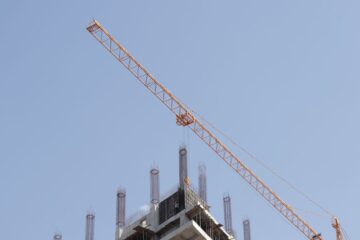
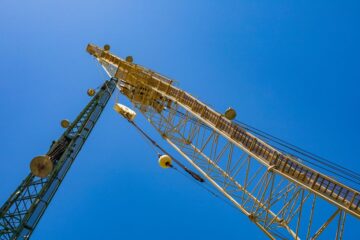
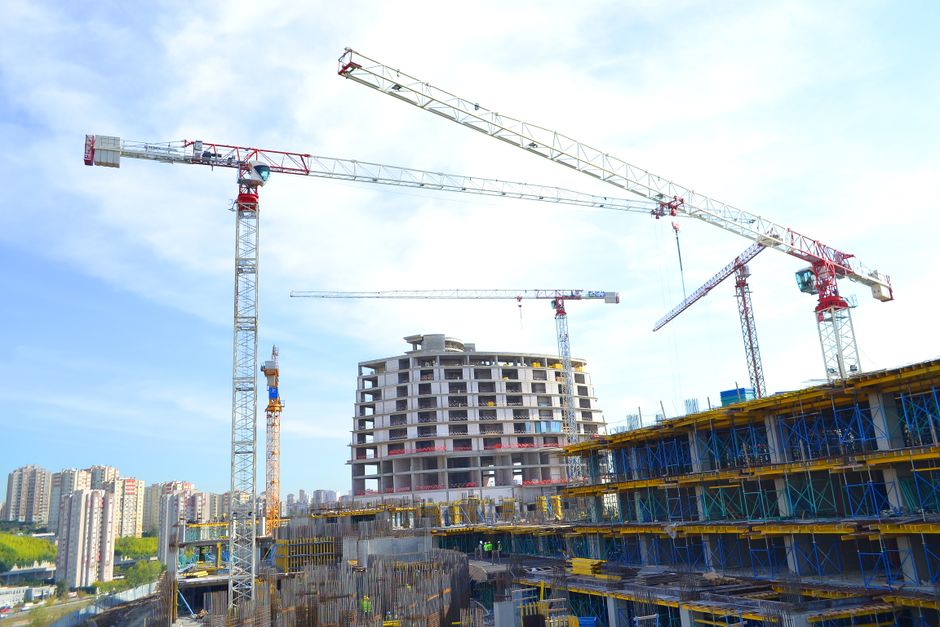
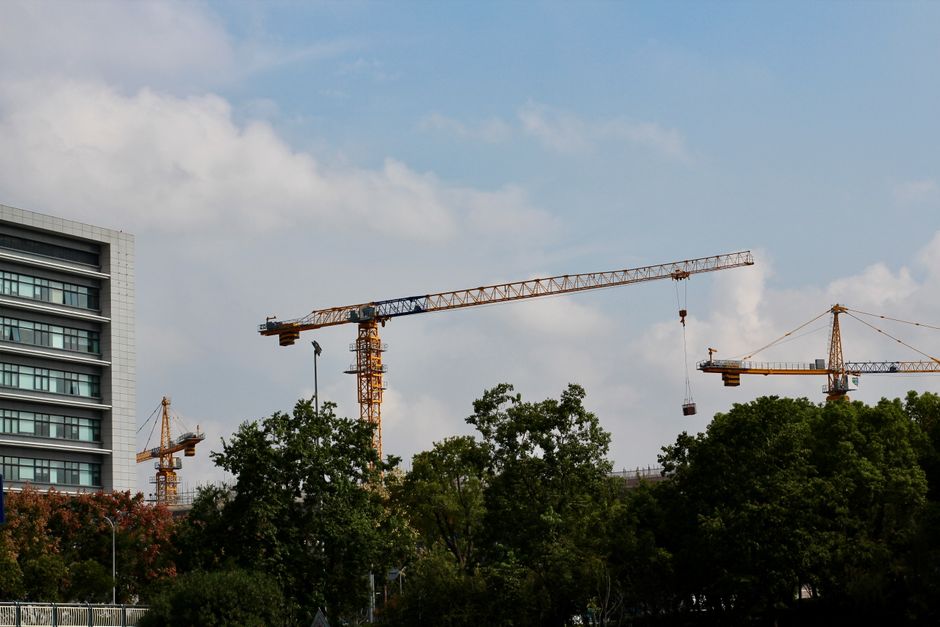
The inspection of mobile crane booms and jibs has historically been one of the most logistically challenging elements of crane maintenance and thorough examination. A fully erected lattice boom on a large crawler crane may extend 80, 100, or even 120 metres into the air — with structural details, weld connections, and coating condition at those heights entirely inaccessible to an inspector on the ground and accessible by close-range human inspection only through the deployment of access equipment that may itself require significant planning and risk management. On telescopic cranes, the inner faces of nested boom sections, the weld details at boom foot pivot zones, and the condition of wear pads in partially extended configurations present access challenges that routine visual inspection frequently fails to address thoroughly. Drones — unmanned aerial vehicles (UAVs) equipped with high-resolution cameras and increasingly sophisticated sensor payloads — offer a transformative solution to these access challenges, enabling detailed close-range inspection of boom and jib structures at any height and in configurations that would be impractical or prohibitively expensive to access by conventional means. Understanding how drone inspection technology is used in crane boom and jib inspection, what it can and cannot detect, and how it integrates with the broader inspection framework is increasingly important knowledge for crane owners, competent persons, and maintenance engineers responsible for crane structural integrity.
The Access Problem in Crane Boom Inspection
Before examining what drones offer, it is worth appreciating the scale of the access problem they address. A mobile crane boom inspection that meets the standard required for a thorough examination under LOLER — a close, detailed examination of the structure by a competent person — demands visual access to the complete external surface of the boom, including all weld details, connection points, and coating surfaces. For a large lattice boom crane erected to full height on a construction or industrial site, achieving this access by conventional means requires one or more of the following:
Rope access technicians — Qualified rope access personnel who descend along the boom structure using industrial rope access equipment. This approach provides close-range human access to the full boom height but requires specialist contractors, significant rigging preparation, and a detailed safe working at height plan. Depending on the boom configuration and the accessibility of the connection points along the boom length, a full rope access boom inspection can take several working days.
Mobile elevated work platforms (MEWPs) — Cherry pickers, boom lifts, and scissor lifts positioned adjacent to the crane provide stable platforms for inspectors to access boom sections at height. However, MEWPs are limited in their maximum working height — typically to around 30 metres for standard units, with specialist MEWPs extending to 50 or 60 metres — and cannot access all parts of a fully erected 100-metre lattice boom without multiple repositions and potentially inadequate reach to the boom’s central sections at maximum height.
Crane-mounted access platforms — Some large cranes can be rigged with purpose-built maintenance platforms that travel along the boom structure. These platforms provide the most thorough access for close-range inspection but require the crane to be taken out of service during the inspection and involve the handling and installation of specialised equipment.
In each case, the access challenge is compounded by the requirement to lower or disassemble the boom for inspection of the inner sections, connections at boom foot level, and the condition of structural elements concealed within the assembled configuration. A thorough examination that genuinely meets the standard required by LOLER for a large crane in full service configuration is a significant logistical undertaking that many operators find impractical to execute at the required inspection frequency.
What Drone Inspection Offers: Capabilities and Advantages
A drone equipped with a high-resolution camera and flown by a qualified operator can access any external point on an erected crane boom or jib structure — including those at the maximum boom height, on the rear face of the boom away from ground-based access, and at connection details that are obscured from ground-level view. The practical capabilities of current drone inspection technology for crane boom inspection include:
High-resolution visual imaging — Modern inspection drones carry cameras with resolution sufficient to capture detail at the level required for visual inspection of weld surfaces, coating condition, and structural deformation. A drone hovering at a standoff distance of two to three metres from the boom surface can capture imagery equivalent in quality to that obtained by a ground-based inspector standing at the same distance — but at any height along the boom’s length. Zoom capabilities on camera payloads allow the pilot to achieve effective close-up imagery from greater standoff distances where direct proximity to the boom is constrained by boom geometry or airspace restrictions.
Thermal imaging — Thermal infrared cameras mounted on inspection drones can detect temperature differentials within the boom structure that indicate moisture ingress beneath the protective coating, delamination of multi-layer coatings, or internal condensation within hollow structural sections. These thermal anomalies are invisible to standard visual inspection but represent important indicators of corrosion initiation that can be addressed proactively before structural damage develops.
Full-height access in a single flight — A single drone flight can inspect the complete external surface of an erected boom — from boom foot to boom tip — in a fraction of the time required to deploy and reposition access equipment covering the same extent. For a large lattice boom crane, a comprehensive drone inspection flight programme can be completed in a working day, compared to multiple days for equivalent rope access coverage.
Safe access to hazardous locations — Drone inspection eliminates the need to place human inspectors in the elevated, exposed positions that close-range boom inspection requires. For cranes working in environments with elevated fall risk, extreme weather vulnerability at height, or restricted access above occupied areas, drone inspection removes the human risk from the inspection process entirely.
Photographic record creation — Drone inspection automatically generates a comprehensive photographic and video record of the boom’s condition at the time of inspection. This record provides a dated, spatially referenced documentation of all observed conditions — enabling comparison between successive inspection cycles to identify progressive changes in coating condition, corrosion development, or structural deformation that might not be apparent from a single inspection in isolation.
Limitations of Drone Inspection That Must Be Understood
Despite its significant advantages, drone inspection has important limitations that define where it fits within the overall crane inspection framework — and where it does not replace conventional methods:
Surface access only — Drone-mounted cameras and sensors assess the external surface of the boom structure. They cannot detect internal defects — subsurface fatigue cracks, internal corrosion, or weld root defects — that require NDT methods such as magnetic particle inspection or ultrasonic testing. Drone inspection provides comprehensive external surface assessment but cannot substitute for the NDT programme required for detection of sub-surface structural defects in fatigue-critical boom components.
Resolution limits at extended standoff — While high-resolution cameras provide excellent imagery at close range, the detail achievable at extended standoff distances is limited by both camera resolution and atmospheric conditions. Fine surface cracks that are readily visible to a trained eye at close range may not be detectable in drone imagery captured from a distance where safe proximity to the boom structure cannot be maintained. The inspection protocol must specify minimum standoff distances and image resolution requirements that ensure the imagery is adequate for the intended inspection purpose.
Access constraints in confined environments — Drone operation near large steel structures is subject to interference from electromagnetic fields generated by the crane’s electrical systems, the propeller wash that can cause the drone to drift when operating in close proximity to the boom, and the GPS signal degradation that occurs within the metallic framework of a fully assembled lattice boom. Experienced crane inspection drone pilots develop operational techniques that manage these constraints — but they cannot be eliminated entirely, and some boom configurations and environments will restrict the areas accessible to safe drone flight.
Regulatory requirements for drone operations — In most jurisdictions, commercial drone operations are subject to Civil Aviation Authority (CAA) or equivalent regulatory authority rules governing operational categories, operator certification, airspace restrictions, and proximity to people and structures. Drone inspection operations on crane sites must comply with these regulations, which may require operational authorisations, specific operator qualifications, and pre-flight coordination with the relevant aviation authority for operations in controlled or restricted airspace.
Requirement for trained, qualified operators — Drone inspection quality is directly dependent on the skill of the drone pilot and the image interpretation competency of the inspector reviewing the captured data. A drone flown by an inexperienced pilot may miss critical areas, capture imagery at inadequate resolution, or fail to investigate anomalies observed during initial flight passes. The inspector reviewing drone imagery must have the structural inspection knowledge to distinguish significant defects from cosmetic surface features — a competency that requires training and experience equivalent to that expected of a contact-based visual inspector.
Integrating Drone Inspection Into the Thorough Examination Framework
The most productive application of drone inspection technology in crane boom maintenance is as an integrated component of the thorough examination programme — complementing rather than replacing conventional inspection methods:
Drone inspection as the primary visual survey tool — For cranes where full access to the boom structure by conventional means is impractical, the drone provides the primary mechanism for the external visual survey that forms the foundation of the thorough examination. The drone’s imagery documents the condition of all accessible external surfaces and identifies any areas requiring follow-up investigation.
Targeted NDT based on drone findings — Where the drone survey identifies areas of potential concern — surface indications, coating damage, deformation, or corrosion — these areas are flagged for targeted NDT investigation by qualified NDT personnel using the appropriate method for the defect type indicated. Drone inspection directs NDT resources to the locations of greatest structural concern rather than requiring blanket NDT coverage of the entire boom — reducing the cost and time of the NDT programme while maintaining the assurance that significant defects are not missed.
Periodic baseline comparison — The photographic record created during drone inspection provides a baseline against which subsequent inspections are compared. Systematic comparison of drone imagery from successive inspections — at the same points on the boom structure, under equivalent lighting conditions — enables the competent person to identify progressive changes in surface condition, coating degradation, or structural deformation that may not be apparent within a single inspection session. This trend-based assessment approach is particularly valuable for identifying slowly developing corrosion or fatigue-related deformation that would otherwise only be detected when it has progressed to a significantly more advanced stage.
Supplementary access for specific components — On telescopic boom cranes, drone inspection of the external surfaces of nested boom sections provides coverage that cannot be achieved during normal operation. When the boom is fully retracted, inner sections are concealed within outer sections. When the boom is extended, inner section surfaces are exposed on the outside of the extended boom — a configuration in which drone inspection can capture imagery of surfaces that are inaccessible in the retracted configuration without disassembly.
Drone Inspection Standards and Competency Requirements
As drone inspection in industrial and structural applications matures, a developing framework of standards and competency requirements is emerging to govern the quality and reliability of drone-based inspection programmes:
Drone operator certification — In the United Kingdom, commercial drone operators must hold appropriate certification under the CAA’s operational authorisation framework — either a General VLOS Certificate (GVC) for standard scenarios or a specific operational authorisation for operations beyond standard category limitations. Operators performing crane boom inspection in proximity to structures and people must hold the qualifications appropriate for their specific operational profile.
Inspection competency — The person responsible for interpreting drone inspection imagery and making structural condition assessments must have the qualifications and experience appropriate for the inspection being performed. For LOLER thorough examination purposes, the competent person responsible for the examination retains accountability for the quality and completeness of the inspection — regardless of the tools used to gather the inspection data. Where drone inspection is used as part of the thorough examination, the competent person must be satisfied that the drone data is adequate for the required inspection standard.
Data management and reporting — Drone inspection data — including all raw imagery, processed imagery, thermal data, and the inspector’s condition assessment — must be retained as part of the crane’s inspection record. The inspection report must clearly document the areas inspected, the imagery resolution and standoff distances achieved, any areas where drone access was limited, and the findings and recommendations of the competent person based on the collected data.
Equipment calibration and maintenance — Drone inspection equipment — cameras, thermal sensors, and flight systems — must be maintained and calibrated in accordance with the manufacturer’s requirements to ensure that the imagery quality meets the required inspection standard. Cameras with degraded sensors, miscalibrated thermal systems, or flight systems with positioning inaccuracies will produce data of compromised quality that may miss significant structural defects.
The Future of Drone-Based Crane Inspection
Drone inspection technology for crane structures is evolving rapidly, and several developments on the near horizon will further enhance the capability and reliability of drone-based crane boom and jib inspection:
Automated flight path programming — Drone inspection systems with pre-programmed flight paths specific to defined crane configurations can fly repeatable, standardised inspection routes that ensure consistent coverage of all structural details at specified standoff distances and image resolution requirements. Automated flight paths eliminate the variability of manually piloted inspection flights and enable systematic comparison of successive inspection data sets.
AI-assisted defect detection — Machine learning algorithms applied to drone inspection imagery can automatically identify surface anomalies — coating damage, corrosion indicators, surface cracks, and deformation — within the captured imagery, flagging them for review by the human inspector. AI-assisted detection reduces the risk of human oversight fatigue causing significant defects to be missed in large volumes of inspection imagery and accelerates the processing of inspection data.
Combined visual and NDT drone systems — Research and development programmes are actively developing drone-mounted NDT systems — including electromagnetic acoustic transducers (EMATs) and eddy current probes — that can perform near-contact NDT measurements on structural surfaces without direct human access. These systems would extend the drone’s inspection capability beyond surface visual assessment to near-surface defect detection — bringing the benefits of drone access to an expanded range of inspection requirements.
Conclusion
Drones represent a genuinely transformative tool in the inspection of mobile crane booms and jibs — providing visual access to structural surfaces at any height, in any crane configuration, with a comprehensive photographic record that conventional access methods cannot match for speed, coverage, or documentation quality. Used correctly — by qualified operators, as part of a structured inspection framework that directs NDT resources to areas of concern identified in drone surveys, and with data retained as part of the crane’s formal inspection record — drone inspection elevates the standard of crane boom examination achievable in routine maintenance programmes.
The crane owners and competent persons who integrate drone inspection into their examination programmes are accessing structural information about their equipment that was previously unavailable except at disproportionate cost and risk. In an industry where structural integrity is a direct determinant of operational safety, that information is not supplementary — it is essential. Drones do not replace the competent person’s judgement, the NDT engineer’s expertise, or the maintenance engineer’s corrective action. They give all three the visual foundation they need to do their work with the confidence that a thorough examination of a complex, elevated structure actually demands.